
- Published
- Published 24 May 2026
- Reviewed
- Reviewed 30 May 2026
- Reading time
- 19 min read
- Sources
- 9 sources
Index
- What Is Mundan or Chudakarana?
- Best Age for Mundan
- How a Mundan Muhurat Is Chosen
- Why City-Specific Timing Matters
- Mini Tool: Mundan Muhurat Planning Worksheet
- Quick Answer: Mundan Muhurat 2026 Dates to Check
- Mundan Vidhi at Home
- Sankalpa Details to Keep Ready
- Mundan Samagri List
- Seven-Day Preparation Timeline
- Temple Mundan vs Home Mundan
- Questions to Ask Your Pandit Before Finalizing
- Where Can Mundan Be Performed?
- Can Girls Have Mundan?
- Child Comfort and Safety Notes
- Common Mistakes Families Make
- What to Avoid
- Regional Names and Customs
- What People Are Searching For
- Best PujaKit Flow for Mundan 2026
- Copy-Ready Family Checklist
- FAQ
- What is the best Mundan Muhurat in 2026 after May 30?
- Is Mundan Muhurat 2026 the same for every city?
- What is the right age for Mundan?
- Can Mundan be done for girls?
- Can Mundan be performed at home?
- Why do different websites show different Mundan dates for 2026?
- What should be avoided on a Mundan day?
- What details are needed to calculate Mundan Muhurat?
- Is temple Mundan better than home Mundan?
- Visual Samagri Reminder
Mundan Muhurat 2026 is one of those searches where a simple date list looks helpful, but can quietly mislead a family. Mundan, also called Chudakarana, is the child's first ceremonial haircut or head-shaving sanskara. The date is chosen from Panchang factors such as tithi, nakshatra, weekday, local sunrise, Rahu Kaal, and often the child's own janma nakshatra.
The safest way to plan is to first understand the sanskara, the child's age and comfort, the ceremony city, and your family custom. Use the 2026 date shortlist later in this guide only after that context is clear; do not finalize the ceremony from a generic national list. A muhurat that works in New Delhi may not be the same in Mumbai, Chennai, London, Toronto, or California.
As of May 30, 2026, January, February, March, April, and most May 2026 mundan dates are already in the past. Families planning now should focus on June-July 2026, or ask a trusted pandit for a city-specific and child-specific date later in the year.
What Is Mundan or Chudakarana?
Mundan is the first ceremonial cutting or shaving of a child's hair. In many Hindu families it is called Mundan Sanskar, Chudakarana, Chudakarma, Chaul, or Choulam depending on region and language.
In the traditional sanskara sequence, Chudakarana is treated as a life-cycle rite connected with the child's transition from infancy into early childhood. Families usually pray for the child's health, long life, clear intellect, protection, and auspicious growth. In some traditions a small tuft or shikha may be retained; in others the head is shaved fully. The practice varies by sampradaya, region, and family custom.
Many families perform mundan at home with a family priest. Others prefer a temple or pilgrimage site, especially when the hair is to be offered respectfully to a deity or immersed according to local practice.
Best Age for Mundan
There is no single age rule followed by every Hindu community. The most common family patterns are:
- First year or third year of the child.
- Odd years such as first, third, or fifth year in some traditions.
- A temple-specific or family-priest date when the child is healthy and calm.
- A combined family function if mundan is being done with Annaprashan, birthday, or another household puja.
Do not force the ceremony only because an online date looks good. If the child is unwell, has a scalp issue, is recently vaccinated and uncomfortable, or the family is under stress, it is better to postpone and choose a cleaner muhurat.
How a Mundan Muhurat Is Chosen
A proper mundan muhurat is not selected from the Gregorian date alone. The Panchang and family rules both matter.
| Factor | Why it matters |
|---|---|
| City and coordinates | Sunrise, sunset, lagna, Rahu Kaal, Yamagandam, and Gulika shift by location. |
| Tithi | Dwitiya, Tritiya, Panchami, Saptami, Dashami, Ekadashi, and Dwadashi are commonly preferred in many lists. |
| Nakshatra | Ashwini, Mrigashira, Punarvasu, Pushya, Hasta, Chitra, Swati, Shravana, Shatabhisha, and Revati appear often in public rules. |
| Weekday | Monday, Wednesday, Thursday, and Friday are commonly preferred. |
| Avoid periods | Rahu Kaal, Bhadra, Panchak, difficult yogas, and family-specific dosha checks are usually avoided. |
| Child factors | Janma nakshatra, janma rashi, birth month, health, and family tradition can change the final answer. |
| Seasonal rules | Some families avoid Chaturmas, Kharmas, Tara Asta, or other periods for auspicious sanskaras. |
This is also why different websites show different dates. One may use a broad algorithm, another may filter by stricter muhurat rules, and another may assume a default city. For a child's sanskara, use the online list as a starting point and let the final decision be local.
Why City-Specific Timing Matters
Parents often copy a timing from a Delhi-based page and use it in another city. That is risky.
Panchang calculations depend on sunrise and the Moon's relationship to the local day. A tithi or nakshatra can begin or end at a different clock time depending on the city. Rahu Kaal is also calculated from local sunrise and sunset. This matters even more for families outside India because time zone, daylight saving time, and local coordinates can shift the practical window.
Use this simple rule:
- Pick a few possible dates from the 2026 table.
- Open the Daily Panchang for the ceremony city.
- Check tithi, nakshatra, weekday, Rahu Kaal, and local sunrise.
- Ask your family priest to confirm the child's janma nakshatra and family rule.
- Book the temple, priest, and barber only after the final time is fixed.
Mini Tool: Mundan Muhurat Planning Worksheet
Use this worksheet before calling the priest or booking the temple. It turns a generic "mundan muhurat 2026" search into a practical family plan.
| Step | Fill this in | Why it matters |
|---|---|---|
| Ceremony city | City, country, and time zone | Panchang timing changes by location. |
| Child details | Name, date of birth, birth time, birth place | Needed if the priest checks janma nakshatra, rashi, or lagna. |
| Family custom | Home, temple, pilgrimage, full shave, first lock only, or shikha retained | Mundan vidhi is not identical in every family. |
| Date shortlist | 3-5 dates from the 2026 table | Gives the priest options if one date fails a Panchang check. |
| Final filters | Rahu Kaal, Bhadra, Panchak, Chaturmas, Kharmas, Tara Asta, family dosha rules | These are common reasons a public date may be rejected. |
| Practical window | Temple hours, child's nap time, travel time, barber availability | The best muhurat still has to be workable for the child. |
| Hair handling | Temple offering, respectful immersion where allowed, or family-approved method | Avoids confusion after the actual haircut. |
| Aftercare plan | Bath, clean clothes, soft cloth, food, rest, scalp comfort | Keeps the ritual gentle and child-centered. |
If you want a simple scoring method, mark each possible date like this:
| Check | Green | Yellow | Red |
|---|---|---|---|
| Panchang | Tithi, nakshatra, weekday, and avoid periods are clean | One factor needs priest review | Major conflict or unclear timing |
| Child comfort | Child is healthy, rested, and not overloaded by travel | Manageable, but schedule is tight | Child is sick, exhausted, or distressed |
| Family logistics | Priest, barber, temple, elders, and travel all fit | One arrangement is uncertain | Too many moving parts |
| Ritual clarity | Vidhi, samagri, sankalpa, and hair handling are decided | A few items pending | Family is still guessing |
Choose the date that stays mostly green. If the Panchang is red, do not rescue the date just because the venue is convenient.
Quick Answer: Mundan Muhurat 2026 Dates to Check
The table below is a practical planning shortlist compiled from current public 2026 mundan muhurat calendars. It is intentionally a date checklist, not a final hour-by-hour muhurat. Before booking a priest, barber, temple slot, or travel, confirm the exact local time with your city Panchang and family tradition.
| Month 2026 | Planning dates to check | PujaKit note |
|---|---|---|
| January | Jan 21, Jan 29 | Already past as of May 30, 2026. Some calendars include more January dates, but stricter traditions may reject them. |
| February | Feb 11, Feb 12, Feb 18, Feb 21, Feb 22, Feb 26, Feb 27 | Already past. February is one of the commonly listed mundan months in public Panchang sources. |
| March | Mar 5, Mar 6, Mar 11, Mar 15, Mar 16, Mar 20, Mar 21, Mar 25, Mar 27, Mar 28 | Already past. Check whether the selected date avoided the child's janma nakshatra and birth month. |
| April | Apr 3, Apr 4, Apr 11, Apr 12, Apr 13, Apr 23, Apr 24, Apr 29 | Already past. Many families use spring dates for temple mundan planning. |
| May | May 3, May 4, May 9, May 10, May 11, May 14, May 15 | Already past as of May 30, 2026. |
| June | Jun 17, Jun 22, Jun 24, Jun 27 | Remaining 2026 dates to investigate first, especially for North Indian family calendars. |
| July | Jul 2, Jul 4, Jul 5, Jul 8, Jul 9, Jul 12, Jul 15, Jul 20, Jul 24, Jul 31 | Check carefully around Chaturmas rules, city timings, and temple availability. |
| August-December | Use only after a pandit checks your city and family rules | Some algorithmic calendars show later dates, while stricter lists avoid periods affected by Chaturmas, Kharmas, Tara Asta, or local tradition. |
If you only need one practical takeaway, keep this: June and July 2026 are the main remaining public planning windows after May 30, 2026, but the final muhurat must be city-specific.
Mundan Vidhi at Home
The exact vidhi depends on region, priest, and family sampradaya. A simple home-friendly structure usually looks like this.
- Clean the home altar and prepare the child gently.
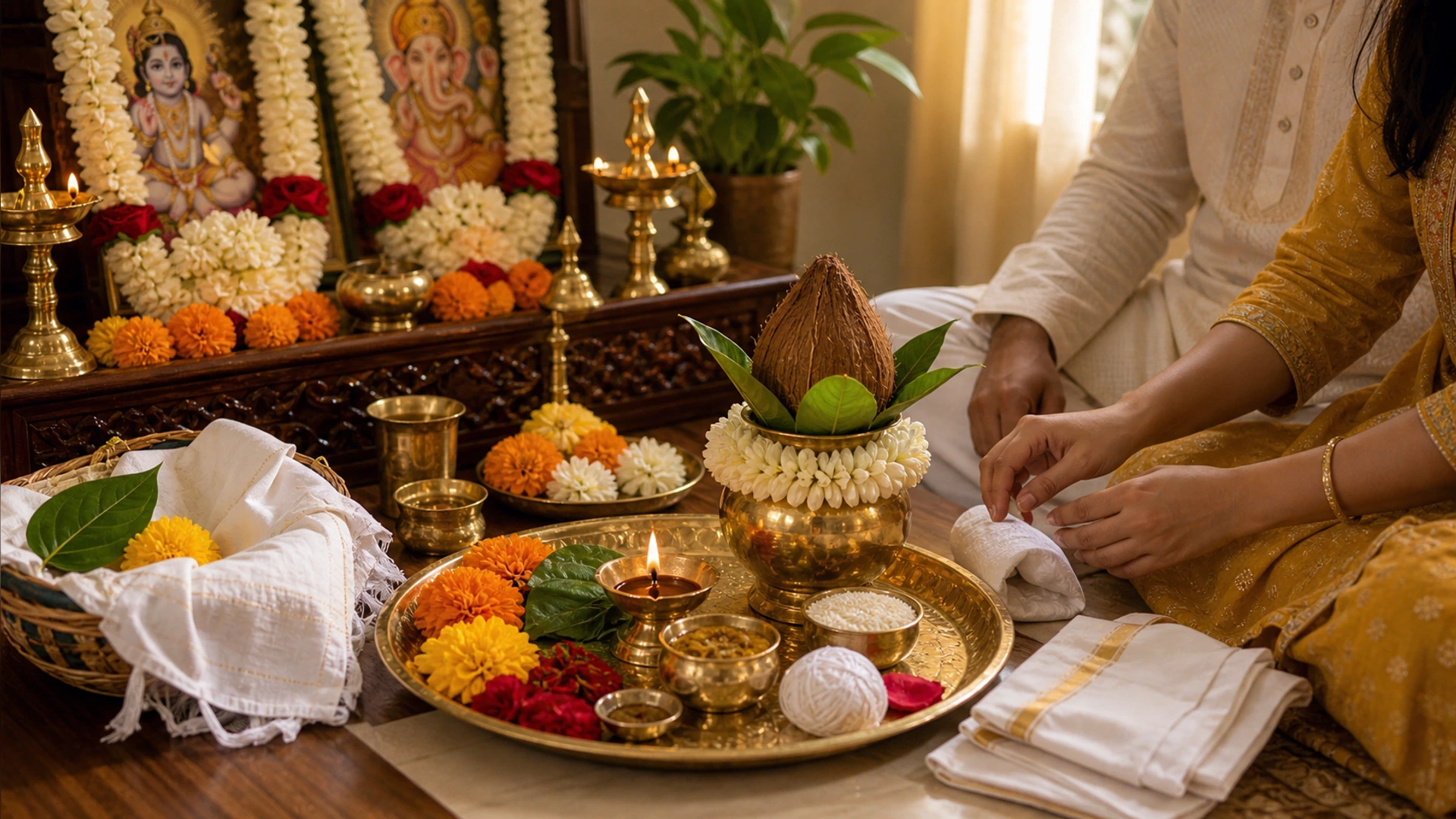
- Place Ganesh ji, a kalash, diya, flowers, akshata, kumkum, haldi, and naivedya.
- The priest or elder makes the sankalpa with the child's name, gotra if used, date, place, and purpose of the sanskara.
- Perform Ganesh Puja, family deity worship, and Ayushya or Navgraha prayers where followed.
- A parent, elder, or priest may make the first symbolic cut according to family custom.
- The barber or trained person completes the haircut with clean tools while the child is safely held.
- The hair is collected respectfully for temple offering, flowing-water immersion where allowed, or another family-approved method.
- The child is bathed, dressed in clean clothes, given tilak, and blessed by elders.
- The family concludes with aarti, prasad, dana, and a simple meal.
Keep the ritual calm. A crying child, crowded room, loud music, and rushed shaving can turn a sacred rite into stress. Comfort is part of the preparation.
Sankalpa Details to Keep Ready
The sankalpa is the formal statement of intention before the puja. Your priest will guide the exact wording, but families can prepare the basic details early.
| Detail | Example of what to prepare |
|---|---|
| Child's name | The name used for the ceremony. |
| Parents' names | Usually father and mother, according to family format. |
| Gotra | If your family uses gotra in rituals. |
| Birth details | Date, time, and place of birth if janma nakshatra is being checked. |
| Ceremony place | Home address, temple name, or pilgrimage place. |
| Purpose | Chudakarana or Mundan Sanskar for the child's health, longevity, protection, and auspicious growth. |
| Family deity | Kuldevata, Ishta Devata, or temple deity if invoked. |
Keeping these details ready saves time on the ritual day and prevents the priest from having to reconstruct important information while the child is already waiting.
Mundan Samagri List
Use the list below as a practical starting point. Your priest may add or remove items according to your tradition.
| Category | Items |
|---|---|
| Puja setup | Chowki, clean altar cloth, Ganesh murti or image, kalash, diya, oil or ghee, incense, camphor. |
| Offerings | Flowers, durva if used, akshata rice, kumkum, haldi, sandal paste, fruits, sweets, coconut, betel leaves and nuts. |
| Havan items | Havan kund, samidha, ghee, havan samagri, spoon, darbha or kusha if required. |
| Child items | New clothes, soft towel, bath items, extra cloth, comfortable seat, water, light snack after the ceremony. |
| Haircut items | Clean scissors or shaving tool, comb, mirror, small bowl or cloth for collecting hair. |
| Aftercare | Gentle bath, clean cap or cloth if needed, and calm rest for the child. |
If the ceremony is at a temple, check their rules before carrying haircut tools, flowers, coconuts, or hair-offering items. Some temples have organized facilities and do not allow outside barbers.
Seven-Day Preparation Timeline
For parents, mundan preparation is usually more about coordination than complexity. This simple timeline keeps the work spread out.
| When | What to do |
|---|---|
| 7-10 days before | Confirm date, place, priest, barber, and whether the ritual is home-based or temple-based. |
| 5 days before | Share birth details and family custom with the priest; confirm samagri list. |
| 3 days before | Arrange child clothes, towels, puja items, prasad, and any travel or temple booking. |
| 1 day before | Keep the child's routine steady; avoid unnecessary late-night travel or overstimulation. |
| Ceremony morning | Bathe, prepare altar, feed the child lightly if appropriate, and keep water and comfort items nearby. |
| During haircut | Keep one calm adult focused only on holding and comforting the child. |
| After ceremony | Bathe the child, dress in clean clothes, offer aarti and prasad, and let the child rest. |
This is also useful for relatives. Send the timeline in the family group so everyone knows the plan and the child does not become the center of too much handling.
Temple Mundan vs Home Mundan
Both are valid when performed with devotion and proper guidance. The better choice depends on the child, the family, and the reason for the ceremony.
| Choice | Best when | Watch out for |
|---|---|---|
| Home mundan | The child needs a quiet space, elders are nearby, and the family wants a controlled setup. | You must arrange the priest, barber, cleanliness, hair handling, and full samagri yourself. |
| Local temple mundan | The family wants a sacred setting without long travel. | Confirm temple rules, timing, crowd level, and whether haircut facilities exist. |
| Pilgrimage mundan | The family has a vow, deity offering, or long-standing tradition connected to a specific temple. | Travel fatigue, queues, weather, child feeding, and temple slot availability matter as much as the muhurat. |
For very young children, a peaceful home or local temple is often easier than a long-distance ceremony. A pilgrimage is beautiful when the family is ready for the logistics.
Questions to Ask Your Pandit Before Finalizing
Before fixing the date, ask direct questions. A good priest will not mind; clarity protects the ritual.
- Is this date valid for the ceremony city, not only for a default Panchang location?
- Does the muhurat avoid Rahu Kaal, Bhadra, Panchak, and other avoid periods followed by our tradition?
- Should the child's janma nakshatra or birth month be avoided?
- Are Chaturmas, Kharmas, Tara Asta, or Guru/Shukra Asta relevant for our family rule this year?
- Is a full havan needed, or is a shorter Ganesh Puja and Ayushya prayer enough?
- Who should make the first symbolic cut?
- Should a shikha be retained?
- How should the hair be offered or disposed of respectfully?
- What exact samagri should we arrange, and what will the priest bring?
These questions are especially important for diaspora families because temple hours, time zones, and local regulations can affect what is actually possible.
Where Can Mundan Be Performed?
Mundan can be performed at home, in a family temple, at a community mandir, or at a pilgrimage site. Families often choose a temple when they want a fuller devotional setting or when the hair is being offered to the deity.
For travel-based mundan, do not plan only around the online muhurat. Confirm:
- Temple opening hours and crowd level.
- Whether the temple provides a barber or tonsure area.
- Whether prior booking is required.
- Whether the chosen muhurat falls during practical access hours.
- How the hair should be handled after cutting.
- Whether elderly relatives and the child can travel comfortably.
The best mundan plan is not the most elaborate one. It is the one that lets the child, parents, priest, and family stay peaceful and attentive.
Can Girls Have Mundan?
Yes, in some Hindu families and communities mundan or a similar first-hair ceremony is performed for girls too. In other families it is done mainly for boys, or not done at all. This is a family and community tradition question, not something to settle from a generic internet article.
If your family performs mundan for daughters, use the same care around Panchang, cleanliness, comfort, and blessings.
Child Comfort and Safety Notes
Mundan is a sacred rite, but it is still performed on a small child. Practical care matters.
- Use clean tools and a trained person for the haircut.
- Keep the child securely held by a calm parent or trusted elder.
- Avoid crowded handling immediately before the haircut.
- Keep the room or temple area ventilated but not cold.
- Do not apply harsh products to the scalp after shaving.
- If the child has eczema, cradle cap, cuts, infection, fever, or unusual scalp sensitivity, speak with a doctor and postpone if needed.
- Keep prasad and food age-appropriate for the child.
This is not medical advice; it is a reminder that dharmic preparation and child care should support each other.
Common Mistakes Families Make
Most mundan confusion comes from mixing ritual needs with event-planning pressure.
| Mistake | Better approach |
|---|---|
| Choosing the first date seen online | Shortlist dates, then confirm by city Panchang and priest. |
| Booking travel before checking the muhurat | First verify the time window, then book travel or temple slots. |
| Treating every 2026 date list as equal | Compare sources, then apply family rules and local timing. |
| Forgetting the child's routine | Plan around nap, feeding, heat, crowd, and travel comfort. |
| Leaving hair handling undecided | Ask in advance whether it is offered at the temple, immersed, or kept for family ritual. |
| Turning the ritual into a large photoshoot | Keep the ceremony devotional and child-centered first. |
What to Avoid
Avoid turning a sanskara into a photo event where the child becomes uncomfortable. Also avoid:
- Copying a muhurat timing from another city.
- Choosing a date without checking the child's janma nakshatra when your family tradition requires it.
- Performing mundan when the child is sick, exhausted, frightened, or has a scalp condition.
- Using unclean tools or an unsafe shaving setup.
- Forcing a temple date that clashes with temple rules or crowd control.
- Treating August-December 2026 dates as universally valid without a stricter Panchang check.
For serious family rites, a little patience is better than a hurried "good enough" muhurat.
Regional Names and Customs
People search this ritual under different names, and each name often carries a slightly different family memory.
| Name | Common usage |
|---|---|
| Mundan Sanskar | Common North Indian Hindi usage for the first haircut or head-shaving rite. |
| Chudakarana or Chudakarma | Sanskritic sanskara name, often used in traditional lists of the sixteen samskaras. |
| Chaul or Choula | Used in parts of western and southern India for the same early-childhood hair rite. |
| Choulam | Commonly heard in some South Indian family and temple contexts. |
| First hair offering | Practical phrase used by diaspora families explaining the ceremony to schools, venues, or non-Hindu service providers. |
Some families shave the child's head fully. Some keep a small shikha. Some cut only a first lock symbolically and complete the haircut later. Some combine the ceremony with a temple visit, birthday, Annaprashan, or a family deity puja. The page can guide planning, but the final form should follow the family's sampradaya and elders.
What People Are Searching For
Searches around mundan muhurat are usually not one question. Parents are trying to solve several decisions at once.
| Search phrase | What the family really needs |
|---|---|
| "mundan muhurat 2026" | A reliable date shortlist, plus a warning that final timing changes by city. |
| "mundan ceremony dates 2026" | Month-wise dates that can be used for early planning, travel, and temple booking. |
| "baby mundan date 2026" | Whether the child is the right age, and whether the date suits the child's nakshatra. |
| "chudakarana muhurat 2026" | The Sanskrit or samskara name for the same first-haircut ritual. |
| "mundan vidhi at home" | A simple ritual sequence: Ganesh Puja, sankalpa, haircut, offering, bath, aarti, prasad. |
| "mundan samagri list" | Puja items, child-care items, and clean haircut supplies in one checklist. |
| "mundan for girl" | Whether the family's community performs the ceremony for daughters too. |
| "best nakshatra for mundan" | A Panchang rule set, not just a date list. |
That is why a better mundan page should answer dates, meaning, rules, age, samagri, vidhi, and local confirmation in one place.
Best PujaKit Flow for Mundan 2026
For a clean planning process, use PujaKit in this order:
- Start with this answer page to understand the 2026 mundan date landscape.
- Read the Chudakarana sanskara guide for the traditional meaning.
- Check Daily Panchang for the ceremony city.
- Use the Muhurat Finder to compare auspicious windows.
- Prepare the sankalpa through the Sankalpa Generator.
- Keep the Ganpati Puja guide ready if the family is doing a home ceremony.
That gives families what most search pages miss: dates, context, Panchang logic, and practical preparation in one path.
Copy-Ready Family Checklist
Use this as a quick message for the family group after the date is confirmed.
- Mundan date and city:
- Confirmed muhurat:
- Priest arrival time:
- Temple or home address:
- Child's clothes and towel:
- Puja samagri owner:
- Barber or temple tonsure arrangement:
- Hair offering method:
- Prasad or meal plan:
- Main comfort person for the child:
- Backup plan if the child is unwell:
FAQ
What is the best Mundan Muhurat in 2026 after May 30?
After May 30, 2026, the main public planning windows to investigate are in June and July 2026. Start with June 17, June 22, June 24, June 27, and July dates such as July 2, July 4, July 5, July 8, July 9, July 12, July 15, July 20, July 24, and July 31, then confirm the exact local muhurat with a city Panchang and your family priest.
Is Mundan Muhurat 2026 the same for every city?
No. Mundan muhurat changes by city because sunrise, sunset, tithi ending time, nakshatra, Rahu Kaal, and lagna timing depend on location. Use a list only for planning, then confirm the final time for the exact city where the ceremony will happen.
What is the right age for Mundan?
Many families perform mundan in the first or third year of the child, while some traditions use odd years such as first, third, or fifth. The right age should follow your family custom, the child's health, and the priest's guidance.
Can Mundan be done for girls?
Yes, some Hindu families perform mundan or a similar first-hair ceremony for girls. Other families perform it mainly for boys. If your family tradition performs it for daughters, the Panchang and ritual care are similar.
Can Mundan be performed at home?
Yes. Mundan can be performed at home with a priest, clean setup, safe haircut tools, Ganesh Puja, sankalpa, blessings, and prasad. Many families also perform it at temples or pilgrimage places when hair offering is part of the tradition.
Why do different websites show different Mundan dates for 2026?
Different websites use different default cities, Panchang methods, rule filters, and assumptions about Chaturmas, Kharmas, Tara Asta, janma nakshatra, and acceptable weekdays. That is why a generic date list should be treated as a planning aid, not as the final muhurat.
What should be avoided on a Mundan day?
Avoid Rahu Kaal, Bhadra, Panchak where applicable, the child's janma nakshatra if your tradition avoids it, and any date when the child is unwell or uncomfortable. Also avoid copying another city's timing without checking your local Panchang.
What details are needed to calculate Mundan Muhurat?
At minimum, you need the ceremony city and preferred date range. For a child-specific muhurat, keep the child's name, date of birth, exact birth time, birth place, janma nakshatra if known, family gotra if used, and family custom ready for the priest.
Is temple Mundan better than home Mundan?
Neither is automatically better. Temple mundan is meaningful when the family has a deity offering, vow, or pilgrimage tradition. Home mundan is often calmer for very young children and easier for elders. Choose the place that supports both devotion and child comfort.
Visual Samagri Reminder
Before finalizing a mundan date, keep the planning connected to Daily Panchang, Puja meaning, Aarti guide, Griha Pravesh samagri planning, and the family priest who will confirm the sankalpa.