
- Published
- Published 24 May 2026
- Reviewed
- Reviewed 26 May 2026
- Reading time
- 12 min read
- Sources
- 3 sources
Index
- What Is Ganpati Puja?
- Why Ganpati Puja Matters Spiritually
- Symbolic Meaning of Lord Ganesha
- The Meaning of Ganpati Ki Puja in Daily Life
- When Is Ganpati Puja Performed?
- Common Occasions for Ganpati Puja
- Best Time for the Puja
- History and Cultural Significance of Ganesh Worship
- Essential Samagri for Ganpati Puja
- Core Puja Items
- What Makes Samagri Authentic?
- The Four Main Rituals of Ganesh Chaturthi
- Step-by-Step Ganpati Puja Vidhi at Home
- 1. Cleanse the Space and Yourself
- 2. Prepare the Altar
- 3. Light the Diya and Incense
- 4. Sankalpa
- 5. Avahana (Invocation)
- 6. Offer Asana, Water, and Ritual Respect
- 7. Apply Haldi, Kumkum, and Akshata
- 8. Offer Flowers and Durva Grass
- 9. Offer Naivedya
- 10. Chant Stotra, Naam, or Aarti
- 11. Perform Aarti
- 12. Pradakshina and Namaskar
- 13. Distribute Prasad
- A Simple Ganpati Puja for Busy Households
- 10-Minute Simple Version
- What Is Offered to Ganesha and Why?
- Most Beloved Offerings
- The 5 Fruits for Ganesha Puja
- Ganesh Chaturthi at Home: Traditional Yet Practical
- A Thoughtfully Modern Approach
- Eco-Friendly Ganpati Puja and Visarjan
- Best Practices
- Common Mistakes to Avoid in Ganpati Puja
- 1. Treating the Puja as Decoration Only
- 2. Using Inauthentic or Impure Samagri
- 3. Ignoring Muhurat Completely
- 4. Rushing Through Without Sankalpa
- 5. Forgetting Simplicity Is Allowed
- 6. Performing Visarjan Carelessly
- Ganpati Puja for Devotees Outside India
- What Helps Most
- Useful Mantras for Ganpati Puja
- Mool Mantra
- Vakratunda Mahakaya
- Ganesha Gayatri
- Ganpati Puja Checklist for Home Worship
- Before the Puja
- During the Puja
- After the Puja
- Why More Devotees Choose Curated Puja Support
- What Makes PujaKit Especially Valuable
- Final Thoughts
- FAQ
- What is the significance of Ganesh Puja?
- What are the four main rituals of Ganesha Chaturthi?
- What are common mistakes to avoid in Ganesh Puja?
- What are the 5 fruits for Ganesha pooja?
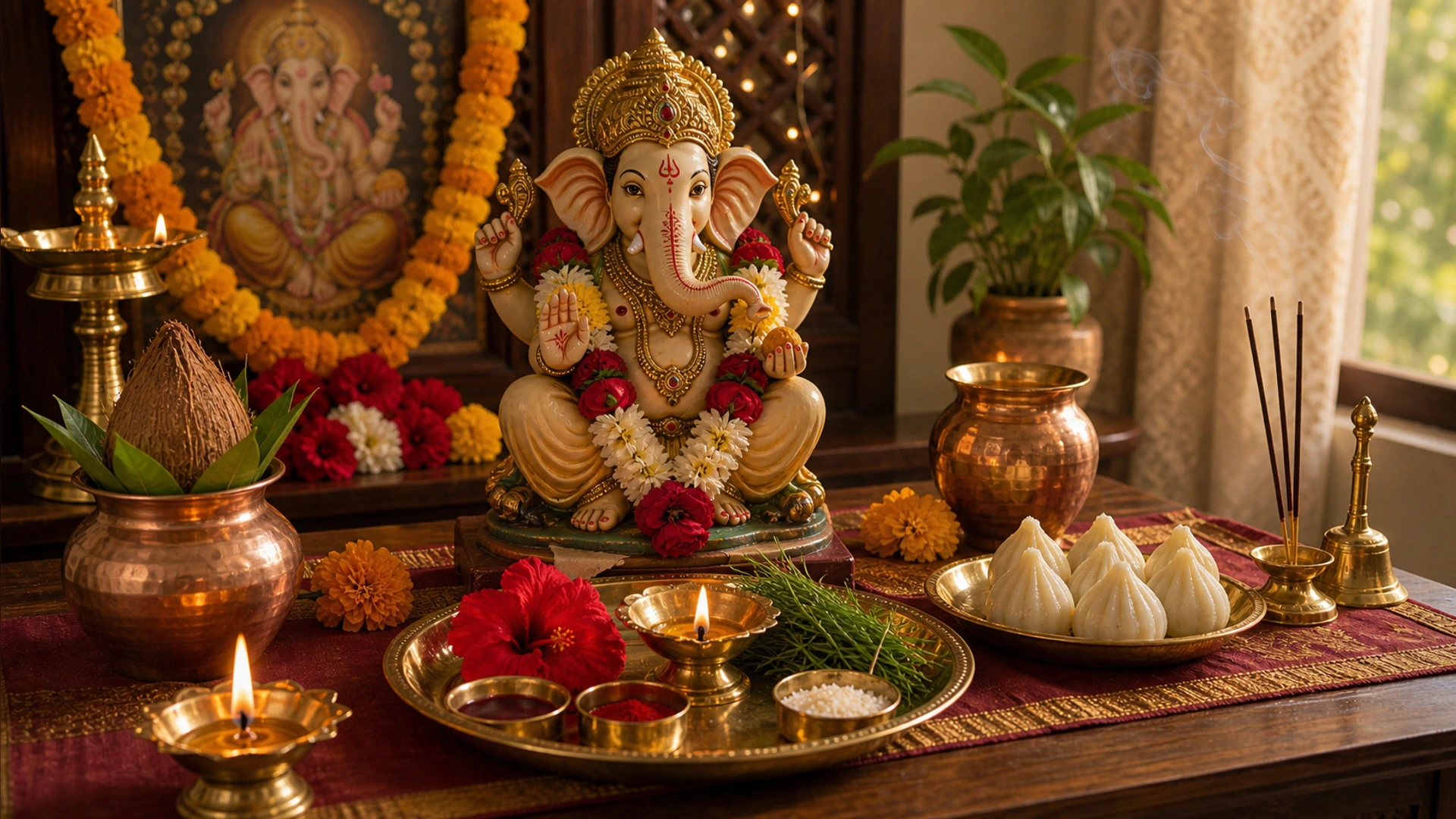
Ganpati puja is one of the most beloved and widely performed forms of Hindu worship. Whether done during Ganesh Chaturthi, before a new venture, on a housewarming day, at the start of studies, or as part of daily devotion, ganpati ki puja is a sacred way of invoking Shri Ganesha - the remover of obstacles, bestower of buddhi, and lord of auspicious beginnings.
For many devotees today, the intention is strong but the process can feel uncertain. Which samagri is truly needed? Which mantra should be recited? What if you live abroad, lack time, or want to perform the puja correctly without confusion? This is where proper guidance matters. A traditional puja need not become stressful. With scripturally aligned preparation, pure samagri, and simple structure, the worship can remain both authentic and accessible.
At PujaKit, we believe devotion should be supported - not complicated. That is why many families now prefer pandit-approved puja kits, verified samagri, daily Panchang and muhurat tools, customizable ritual support, and even pandit booking and temple-connected resources, all in one trusted ecosystem.
What Is Ganpati Puja?
Ganpati puja is the worship of Lord Ganesha, also called Ganapati, Vinayaka, and Vighnaharta. In Hindu tradition, Ganesha is worshipped before all major rituals and new beginnings because he is invoked first to remove hindrances and establish auspiciousness.
He is revered as:
- The remover of obstacles
- The lord of wisdom and intellect
- The patron of learning, arts, and beginnings
- The guardian of thresholds and sacred undertakings
This is why ganpati ki puja is performed before:
- Weddings
- Griha pravesh
- Business openings
- Travel
- Examinations
- Daily sadhana
- Festival worship, especially Ganesh Chaturthi
Video Guide
Why Ganpati Puja Matters Spiritually
Ganpati puja is not only a ritual for success in worldly matters. At a deeper level, it is a prayer for inner alignment.
Symbolic Meaning of Lord Ganesha
| Feature of Ganesha | Spiritual Meaning |
|---|---|
| Elephant head | Wisdom, memory, discrimination |
| Large ears | Listen more, absorb truth |
| Small eyes | Focus and concentration |
| Curved trunk | Adaptability and intelligence |
| Large stomach | Capacity to digest life's experiences |
| Broken tusk | Sacrifice, resilience, and higher purpose |
| Mouse vehicle | Mastery over restless desire and ego |
When devotees perform ganpati puja, they are not merely offering flowers and sweets. They are also praying for:
- Clear judgment
- Humility
- Success with dharma
- Steadiness in difficulty
- Grace before action
The Meaning of Ganpati Ki Puja in Daily Life
In practical terms, ganpati ki puja is the act of beginning with sacred awareness. It teaches a timeless principle: before effort, invoke grace.
This is why many devotees keep a simple Ganpati shrine in the home or workplace. Even a short daily offering of diya, flowers, and a mantra like "Om Gan Ganapataye Namah" becomes a way to center the mind before worldly duties begin.
When Is Ganpati Puja Performed?
Ganpati puja may be performed on many occasions, from simple daily prayer to elaborate festival worship.
Common Occasions for Ganpati Puja
- Ganesh Chaturthi
- Sankashti Chaturthi
- Before starting a new business
- Before exams or academic milestones
- Griha pravesh
- Marriage ceremonies
- Bhoomi pujan
- New vehicle purchase
- Daily or weekly household worship
Ganesh Chaturthi usually begins on the fourth day, or Chaturthi, of the Hindu lunar month of Bhadrapada, which normally falls between mid-August and mid-September.
Best Time for the Puja
Traditionally, the puja is done during an auspicious muhurat, especially during Ganesh Chaturthi or major life events. For modern households, especially those balancing work and family, using a Daily Panchang and Muhurat Finder is extremely helpful.
PujaKit supports devotees with:
- Daily Panchang access
- Muhurat-based planning
- Sankalpa guidance
- Festival timing support for India and overseas devotees
History and Cultural Significance of Ganesh Worship
Ganpati worship has deep roots in Hindu tradition, but its public celebration became especially prominent in modern India through community-based Ganesh Chaturthi observances.
Historically, the public form of Ganesh Chaturthi became especially prominent in Maharashtra in the late nineteenth century, when Bal Gangadhar Tilak encouraged community celebrations as a way to bring people together.
This history matters because it shows that Ganpati puja is both:
- Deeply personal for the household, and
- Powerfully communal in collective Hindu life
Today, the puja continues across homes, temples, societies, and the global Indian diaspora - from Mumbai to Melbourne, from Chennai to California.
Essential Samagri for Ganpati Puja
One of the biggest pain points for devotees is uncertainty about what is actually required. Many articles list items loosely, but do not explain what is essential versus optional.
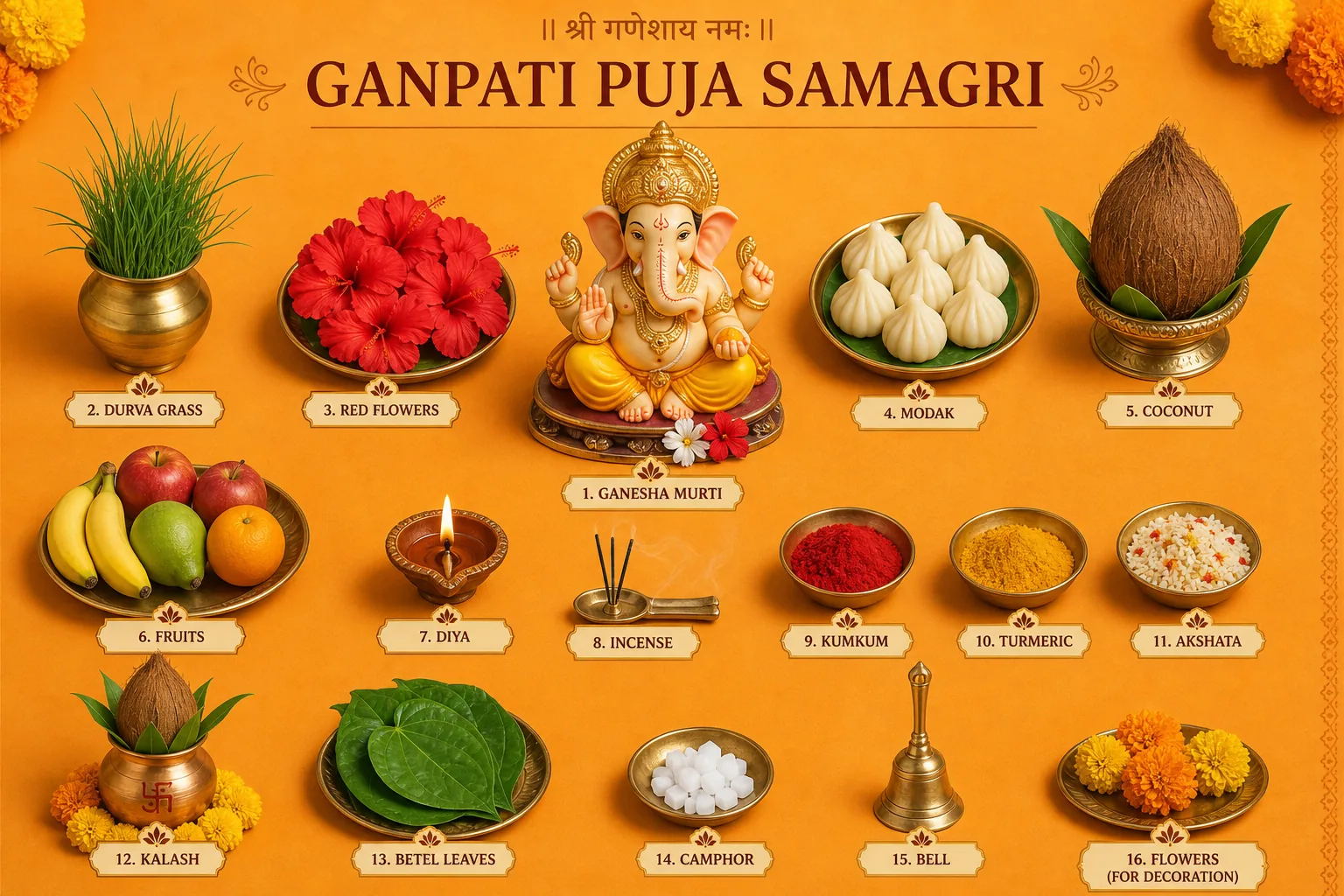
Below is a clearer view.
Core Puja Items
| Item | Purpose |
|---|---|
| Ganesha murti or image | Main deity for worship |
| Clean chowki or altar cloth | Sacred seat for setup |
| Kalash with water | Symbol of abundance and divine presence |
| Kumkum and haldi | Auspicious marking and offerings |
| Akshata (rice) | Sacred offering |
| Flowers | Devotional offering |
| Durva grass | Especially प्रिय to Ganesha |
| Diya | Light of consciousness |
| Incense | Fragrance and purification |
| Camphor | Final aarti |
| Fruits | Naivedya |
| Modak or laddoo | Favorite offering to Ganesha |
| Betel leaves and nuts | Traditional offering |
| Coconut | Purity and surrender |
| Panchamrit | Ritual abhishek in some traditions |
What Makes Samagri Authentic?
Not all puja supplies available online are equally suitable. Many modern products include synthetic fragrance, artificial color, or low-quality ritual substitutes. For sincere worship, purity matters.
PujaKit emphasizes:
- Pandit-approved kits
- Scripturally aligned inclusions
- Pure samagri without synthetic shortcuts
- Eco-safe and biodegradable packaging
- Convenient all-in-one preparation for families in India and abroad
The Four Main Rituals of Ganesh Chaturthi
Many devotees search specifically for the central rituals of Ganesh Chaturthi. These are:
- Prana Pratishtha - inviting divine presence into the murti
- Shodashopachara Puja - the traditional sixteen-fold worship
- Uttarpuja - concluding prayer and respectful farewell
- Ganpati Visarjan - immersion of the murti
These four rituals also help organize a home celebration in a meaningful way.
Step-by-Step Ganpati Puja Vidhi at Home
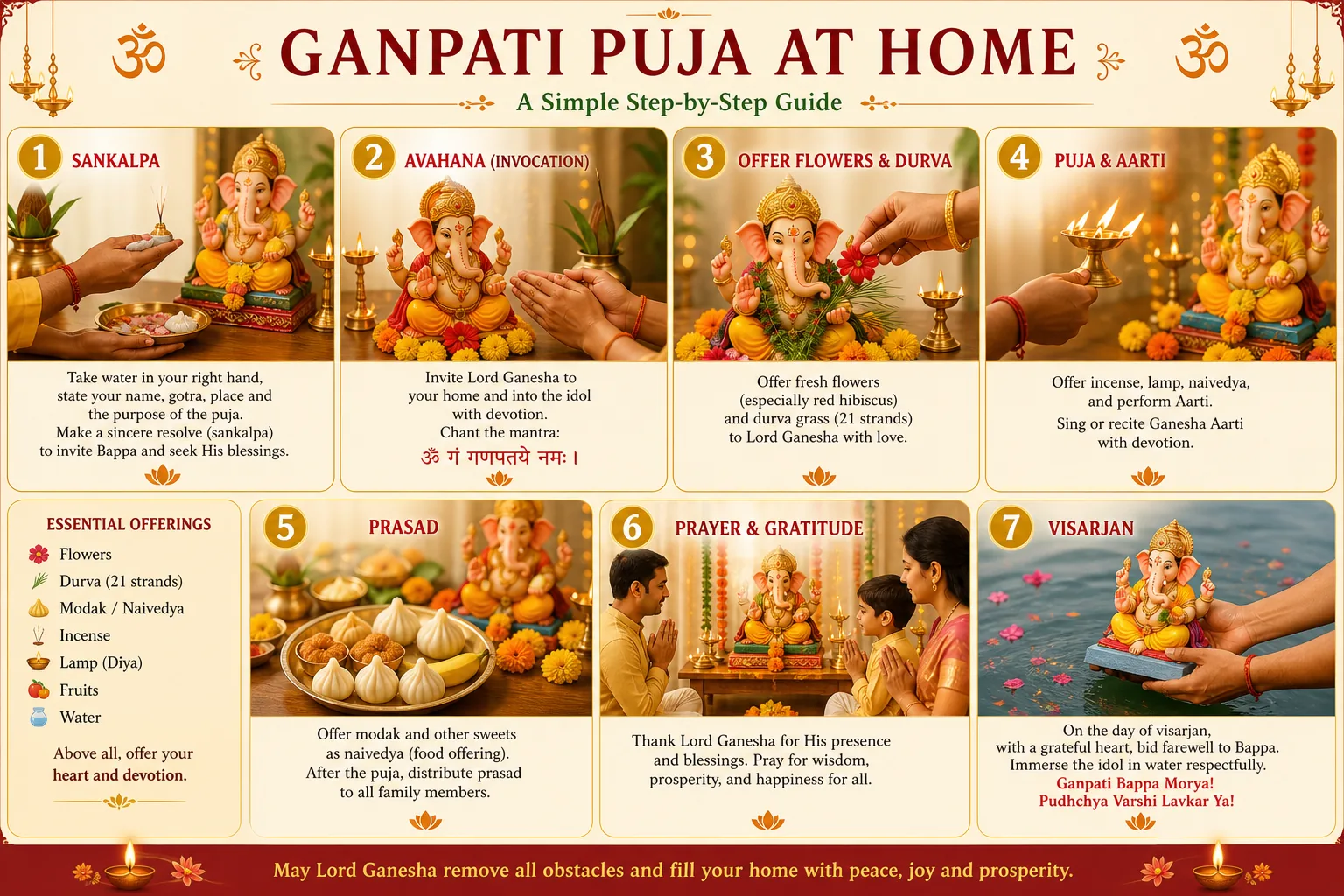
A major content gap in many competitor articles is that they mention the puja but do not give a complete, practical, home-friendly sequence. Below is a clear version suitable for most households.
1. Cleanse the Space and Yourself
Begin by bathing and wearing clean clothes. Clean the altar area and arrange the murti respectfully on a raised surface.
2. Prepare the Altar
Place:
- Ganesha murti or framed image
- Kalash
- Diya
- Incense
- Offerings
- Flowers and durva
- Puja thali
Face the altar east or north where possible.
3. Light the Diya and Incense
This marks the beginning of sacred time and helps shift the mind into a devotional state.
4. Sankalpa
State your intention. This may be for:
- Family well-being
- Removal of obstacles
- Festival worship
- Success in studies or work
- Peace and devotion
A Sankalpa Generator or guided template can be especially useful for younger devotees and diaspora households unfamiliar with traditional wording.
5. Avahana (Invocation)
Invite Lord Ganesha into the murti or image with folded hands and mantra.
A common mantra: Om Gan Ganapataye Namah
6. Offer Asana, Water, and Ritual Respect
In traditional puja, the deity is offered:
- Seat
- Water for washing feet and hands
- Water for sipping
- Bathing substances
- Fresh cloth
- Fragrance and adornment
In simple home worship, this may be done symbolically.
7. Apply Haldi, Kumkum, and Akshata
Offer turmeric, vermilion, and rice with devotion.
8. Offer Flowers and Durva Grass
Durva is especially sacred in ganpati puja. Offer it gently with mantra or namasmarana.
9. Offer Naivedya
Common offerings include:
- Modak
- Besan laddoo
- Coconut
- Banana
- Apple
- Pomegranate
- Guava
- Seasonal fruits
10. Chant Stotra, Naam, or Aarti
You may recite:
- Ganapati Atharvashirsha
- Ganesha Ashtottara
- Sankata Nashana Ganesha Stotram
- Simple Ganesha aarti
If you are unsure what to chant, digital devotional support tools, guided aarti pages, and scripture libraries can make the process much easier.
11. Perform Aarti
Circle the lit aarti flame before the deity and pray sincerely.
12. Pradakshina and Namaskar
Offer prostration or folded hands in gratitude.
13. Distribute Prasad
Share naivedya as prasad with all present.
A Simple Ganpati Puja for Busy Households
Not every family can perform a full shodashopachara puja daily. That does not make devotion lesser. A shorter form done with shraddha is still beautiful.
10-Minute Simple Version
- Clean the altar
- Light diya
- Offer flowers and durva
- Chant "Om Gan Ganapataye Namah" 21 times
- Offer fruit or modak
- Perform short aarti
- Pray in silence
This simplified practice is ideal for:
- Working professionals
- Students
- Small families
- Devotees living abroad
- Elderly practitioners who need convenience without dilution
What Is Offered to Ganesha and Why?
Most Beloved Offerings
| Offering | Meaning |
|---|---|
| Modak | Sweetness of spiritual wisdom |
| Durva grass | Humility, freshness, sacred simplicity |
| Coconut | Ego offered to the Divine |
| Red flowers | Auspicious devotion |
| Banana | Simplicity and nourishment |
| Laddoo | Joy and fulfillment |
The 5 Fruits for Ganesha Puja
Though regional practice varies, common fruits offered include:
- Banana
- Apple
- Pomegranate
- Coconut
- Guava
The essential principle is freshness, purity, and devotion.
Ganesh Chaturthi at Home: Traditional Yet Practical
Many competitor articles explain the festival but do not address modern realities. Families today may live in apartments, outside India, or in places without easy access to samagri or community pandits.
A Thoughtfully Modern Approach
For modern devotees, an authentic Ganesh Chaturthi setup can include:
- Eco-friendly clay murti
- Compact altar for apartment living
- Ready-curated samagri kit
- Guided digital aarti and mantra access
- Muhurat reminders
- Family-friendly puja checklist
- Home visarjan or eco-safe symbolic immersion
This is exactly where PujaKit serves modern spiritual life well: preserving tradition while removing avoidable confusion.
Eco-Friendly Ganpati Puja and Visarjan
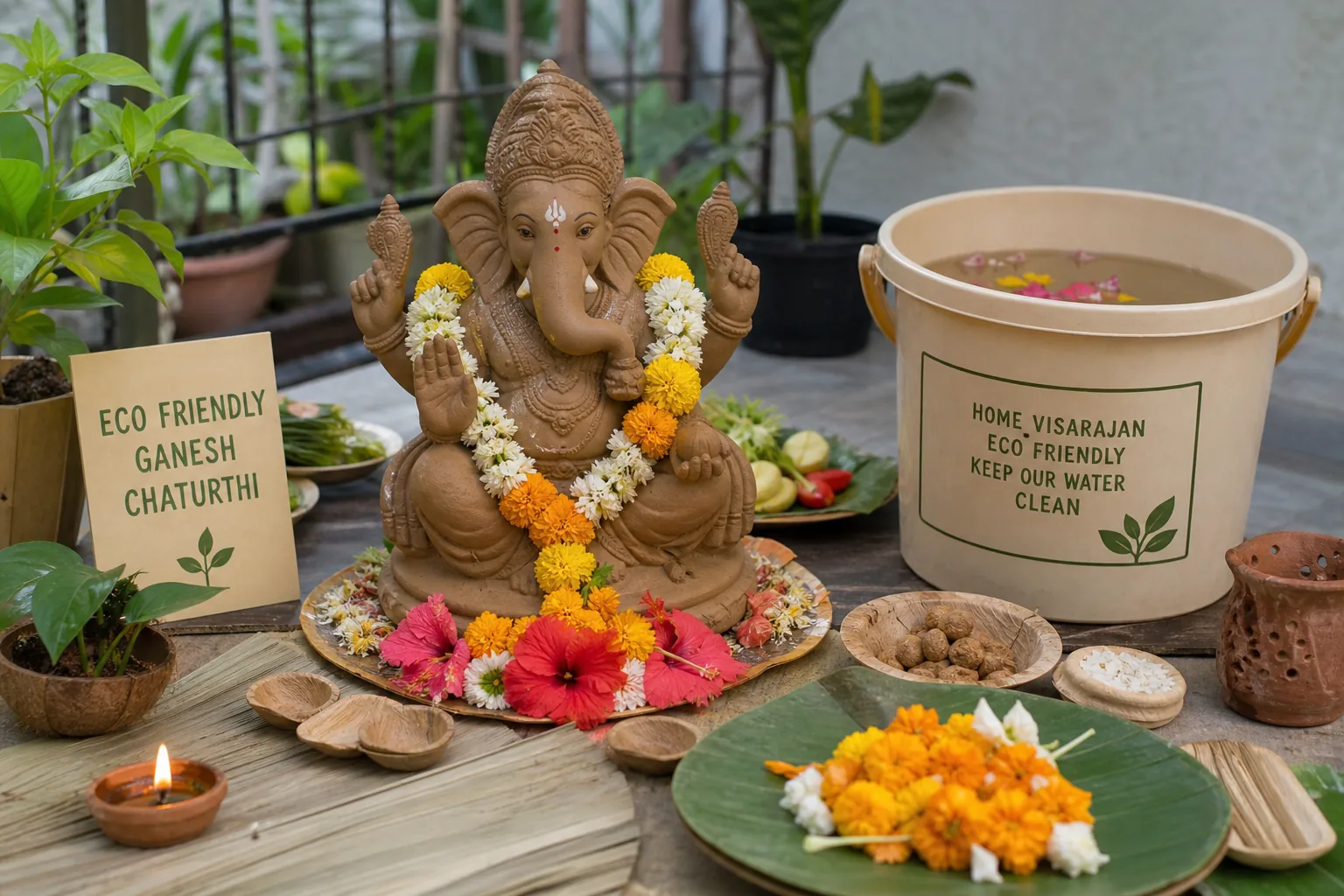
A significant content gap in many articles is the environmental aspect. Traditional devotion and ecological responsibility should go together.
Best Practices
- Choose a natural clay idol
- Avoid chemical paints and glitter
- Use biodegradable decor
- Prefer leaf plates, natural flowers, and reusable brassware
- Consider symbolic visarjan in a clean vessel at home where appropriate
- Return dissolved clay to plants or garden soil where tradition and local conditions allow
PujaKit's eco-safe packaging and sustainable ritual approach make it easier for families to honor both dharma and environmental care.
Common Mistakes to Avoid in Ganpati Puja
This is one of the most searched but poorly answered topics online. Here are the most common mistakes devotees should avoid.
1. Treating the Puja as Decoration Only
A beautiful altar is welcome, but puja is not just aesthetic display. Bhava matters most.
2. Using Inauthentic or Impure Samagri
Artificial substitutes, low-grade incense, or random kits can dilute ritual quality.
3. Ignoring Muhurat Completely
Not every puja requires extreme precision, but for festival or major life rituals, proper timing adds sanctity.
4. Rushing Through Without Sankalpa
Even a short intention spoken sincerely creates spiritual focus.
5. Forgetting Simplicity Is Allowed
If you cannot do a long ritual, do a shorter one properly and peacefully.
6. Performing Visarjan Carelessly
The farewell should be respectful, clean, and mindful.
Ganpati Puja for Devotees Outside India
Diaspora devotees often face distinct difficulties:
- Hard-to-find samagri
- Lack of local pandits
- Uncertainty about procedure
- Time-zone differences for muhurat
- Desire to teach children properly
What Helps Most
| Need | Helpful Support |
|---|---|
| Correct items | Curated puja kits |
| Timing confusion | Daily Panchang and Muhurat Finder |
| Ritual uncertainty | Guided instructions and digital learning |
| Family participation | Aarti, mantra, and visual guides |
| Access to clergy | Pandit booking support |
| Connection to temples | Live darshan and temple discovery |
For Indians abroad, PujaKit becomes more than a shopping platform - it becomes a ritual companion connected to home tradition.
Useful Mantras for Ganpati Puja
Mool Mantra
Om Gan Ganapataye Namah
Vakratunda Mahakaya
**Vakratunda Mahakaya Suryakoti Samaprabha Nirvighnam Kurume Deva Sarva-Kaaryeshu Sarvada**
Ganesha Gayatri
**Om Ekadantaya Vidmahe Vakratundaya Dhimahi Tanno Dantih Prachodayat**
Even chanting one mantra with focus is spiritually beneficial.
Ganpati Puja Checklist for Home Worship
Before the Puja
- Clean the home altar
- Confirm muhurat
- Arrange murti and chowki
- Prepare diya and incense
- Keep fruits, flowers, and sweets ready
- Keep water, akshata, haldi, kumkum, and durva available
During the Puja
- Sankalpa
- Invocation
- Offerings
- Mantra or stotra recitation
- Aarti
- Prasad
After the Puja
- Share prasad
- Keep altar clean
- Continue daily namaskar during festival period
- Plan respectful visarjan if applicable
Why More Devotees Choose Curated Puja Support
The modern challenge is not lack of devotion - it is lack of time, clarity, and trustworthy sourcing.
What Makes PujaKit Especially Valuable
- Pandit-approved and scripturally aligned puja kits
- Pure, authentic samagri without synthetic shortcuts
- All-in-one preparation for busy families
- Daily Panchang and muhurat tools
- Digital japa, aarti, and devotional learning features
- Live darshan and temple discovery
- Customizable kits for household needs
- Pandit booking support
- Eco-safe and biodegradable packaging
- Pan-India delivery and relevance for devotees abroad
This is especially meaningful for:
- First-time householders
- Young couples building family traditions
- Festival observers
- Working professionals
- NRIs and diaspora Hindus
- Anyone who wants convenience without compromising authenticity
Final Thoughts
Ganpati puja is a sacred invitation to begin rightly - with humility, devotion, and clear intention. It is both simple and profound. A single flower offered with faith is meaningful; a full ritual performed with understanding is even more powerful. What matters most is sincerity, purity, and reverence.
Yet sincere devotion deserves proper support. If you want your ganpati ki puja to feel less stressful and more spiritually grounded, PujaKit offers a trusted path: authentic samagri, guided ritual structure, traditional integrity, modern convenience, and meaningful devotional tools for every stage of worship.
For your next ganpati puja, choose a preparation that honors both shastra and today's life. With PujaKit, the sacred becomes easier to practice - without becoming less sacred.
FAQ
What is the significance of Ganesh Puja?
Ganesh Puja is performed to invoke Lord Ganesha as the remover of obstacles, giver of wisdom, and guardian of auspicious beginnings. It helps devotees begin important actions with clarity, humility, and divine grace.
What are the four main rituals of Ganesha Chaturthi?
The four main rituals are Prana Pratishtha, Shodashopachara Puja, Uttarpuja, and Ganpati Visarjan. Together, they mark the welcoming, worship, respectful conclusion, and immersion of Lord Ganesha's murti.
What are common mistakes to avoid in Ganesh Puja?
Avoid using impure or random samagri, skipping sankalpa, rushing the ritual, and treating the puja like decoration only. It is also important to perform visarjan respectfully and choose an eco-friendly approach where possible.
What are the 5 fruits for Ganesha pooja?
Common fruits offered in Ganesha pooja include banana, apple, pomegranate, coconut, and guava. Regional customs vary, but the fruits should always be fresh, pure, and offered with devotion.