
Composing…
Our StoryAbout PujaKit:
About PujaKit:
From the Temple to Your Home

"We believe that devotion should feel close to home. PujaKit began with a simple household question: why should gathering the right samagri feel harder than sitting for the puja itself?"
The Challenge We Kept Seeing
For many Hindu households in India and abroad, preparing for a festival, vrat, havan, griha pravesh, or daily puja can become a logistical exercise. One shop has diyas, another has kapoor, a third has kalawa, and the item you remembered from your family's vidhi is suddenly difficult to find.
Too often, families compromise on quality, skip a step, or order something without knowing whether it is actually needed. PujaKit was created to make preparation calmer, more informed, and closer to the spirit of the ritual.
ॐ
Our Mission
To help families prepare for Hindu rituals with authentic samagri, practical guidance, transparent service, and respect for the traditions that shape each vidhi.
A Small Team Building for Real Homes
PujaKit is built by a small India-based team that cares about making Sanatana Dharma easier to practice in everyday life. We are not trying to replace family elders, local pandits, temple traditions, or sampradaya guidance. We are trying to support the practical layer around them: preparation, access, clarity, and dependable information.
The first version of PujaKit focused on curated puja kits and samagri. Over time, the product grew into a wider devotional companion with a daily panchang, festival calendar, vrat information, live darshan discovery, temple pages, Sanskrit glossary, and simple tools for sankalpa, japa, and ritual planning.
We will share more about the founders and team as PujaKit grows. For now, the clearest introduction is the work itself: careful pages, honest disclaimers, responsive support, and a commitment to serve Hindu households without making exaggerated promises.
What we are building
- Authentic puja samagri and curated ritual kits.
- Daily panchang, muhurat, vrat, and festival context.
- Learning pages for scriptures, stotras, temples, and Sanskrit terms.
- Clear routes to contact support or request pandit guidance.
The Journey So Far
PujaKit is growing step by step, not as a generic marketplace, but as a focused Hindu household platform. Each layer exists because preparation, timing, learning, and trust all meet inside real devotional life.
- 1
It started with samagri
The earliest PujaKit work was simple: identify the items families repeatedly need for puja, vrat, havan, festival preparation, and daily altar care, then make those items easier to understand and request.
Explore samagri - 2
Then came daily context
A kit is useful only when a family also knows the day, tithi, nakshatra, vrat, festival, and timing context around the ritual. That is why the panchang and calendar became part of the platform.
View panchang - 3
Now it is a devotional platform
PujaKit now connects commerce, learning, temple discovery, live darshan, sankalpa support, and ritual tools so a household can prepare, understand, and practice in one place.
Open learning hub
How We Work
We do not just put items in a box. PujaKit kits and content are shaped around the intended vidhi, practical household needs, and a preference for clear explanations over decorative spiritual language.
Rituals first, commerce second
Every kit starts with the vidhi: what the puja asks for, what households commonly miss, and what can be packed responsibly without turning devotion into a checklist.
Plain guidance over vague claims
We explain what an item is used for, where tradition varies, and when a family should ask their own pandit or sampradaya before changing a practice.
Useful for the daily sadhaka
PujaKit is not only a shop. Our panchang, festival pages, tools, temple directory, and learning guides are built for people trying to keep dharma present in ordinary home life.
A Platform You Can Verify
A genuine devotional platform should be easy to inspect. PujaKit keeps product surfaces, learning routes, legal pages, social profiles, and business contact details connected so visitors can understand who we serve and how to reach us.
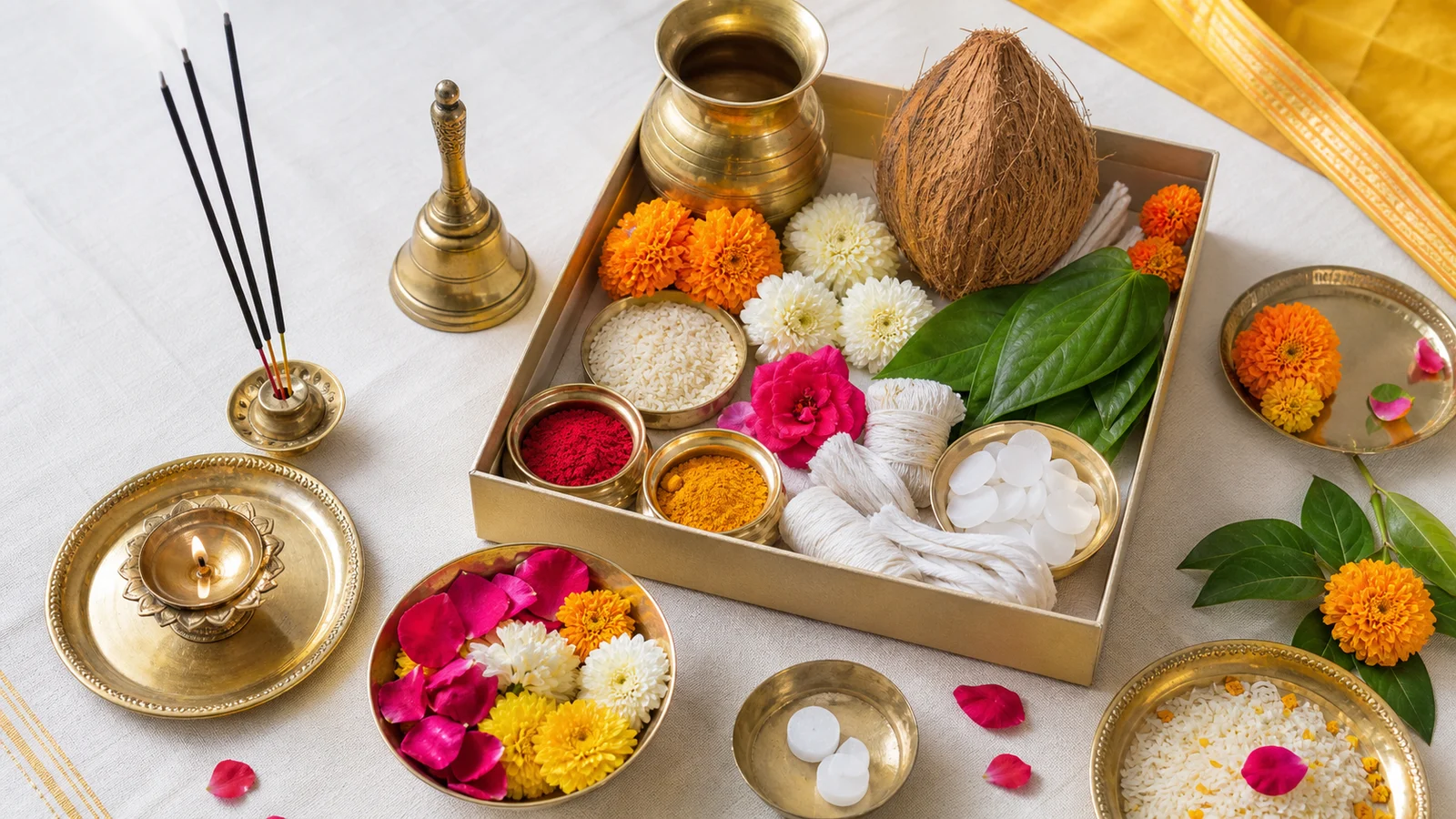
Ritual preparation
The practical layer of puja matters: the right items, clean setup, and a calm household rhythm.
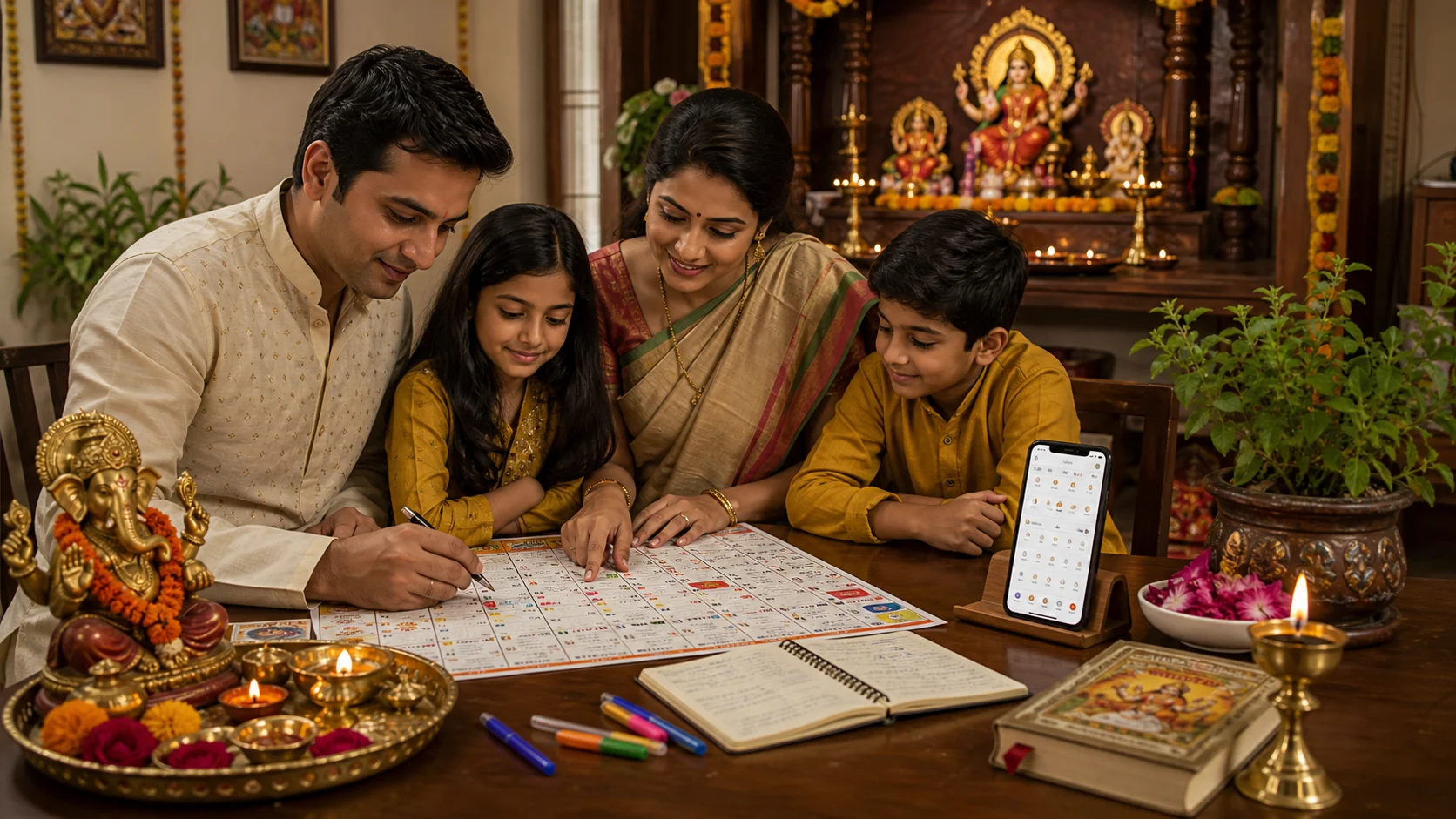
Sacred context
Our pages connect samagri with panchang, festival, vrat, temple, and scripture context.

Learning and trust
We keep guidance, source context, policies, support routes, and public profiles visible.
What Makes PujaKit Different
Samagri with context
We map items to common Hindu puja needs such as Lakshmi Puja, Ganesh Chaturthi, Satyanarayan Puja, griha pravesh, havan, vrat observances, and daily altar care.
Careful content boundaries
Our active product surfaces focus on Sanatana Dharma and Hindu practice. We avoid generic interfaith or public-holiday content because PujaKit should be clear about whom it serves.
Transparent service limits
We can help prepare materials and guidance, but we do not promise spiritual outcomes, medical results, astrological certainty, or guaranteed temple/service availability.
Our Promise to Devotees
PujaKit should feel useful, respectful, and honest. If a product or page cannot be explained clearly, it does not belong on the site yet. If a tradition has regional variation, we try to say so. If a service needs human confirmation, such as a pandit booking or custom kit request, we keep it as a request until details are confirmed.
This approach is why our public pages include a separate Promise, Methodology, Privacy Policy, and Disclaimer. Trust is not a slogan for us; it is how the product should behave.
Explore PujaKit
Prepare for puja
Browse samagri, request kits, and ask for ritual preparation support.
Plan the day
Use calendar and timing tools before choosing a puja date or vrat observance.
Learn the tradition
Read plain-language references for Sanskrit terms, temples, stotras, and practice.
Business details