
- Published
- Published 24 May 2026
- Reviewed
- Reviewed 31 May 2026
- Reading time
- 4 min read
- Sources
- 3 sources
A Diwali Lakshmi Puja Kit should make Diwali Lakshmi Puja easier, not turn devotion into a product checklist. This guide explains what the kit is for, what to check before buying, which items are usually useful, and how to connect samagri to a real puja sequence.
Quick Answer
A Diwali Lakshmi Puja kit should support Lakshmi-Ganesha worship on Amavasya, but fresh flowers, sweets, and household-specific offerings should still be arranged locally.
A good kit is practical when it saves time, avoids last-minute missing items, and still respects family tradition. It should not claim that one box is mandatory for every household. Use the kit as a preparation aid, then follow your local priest, elder, or family vidhi for the actual sequence.
What The Kit Should Support
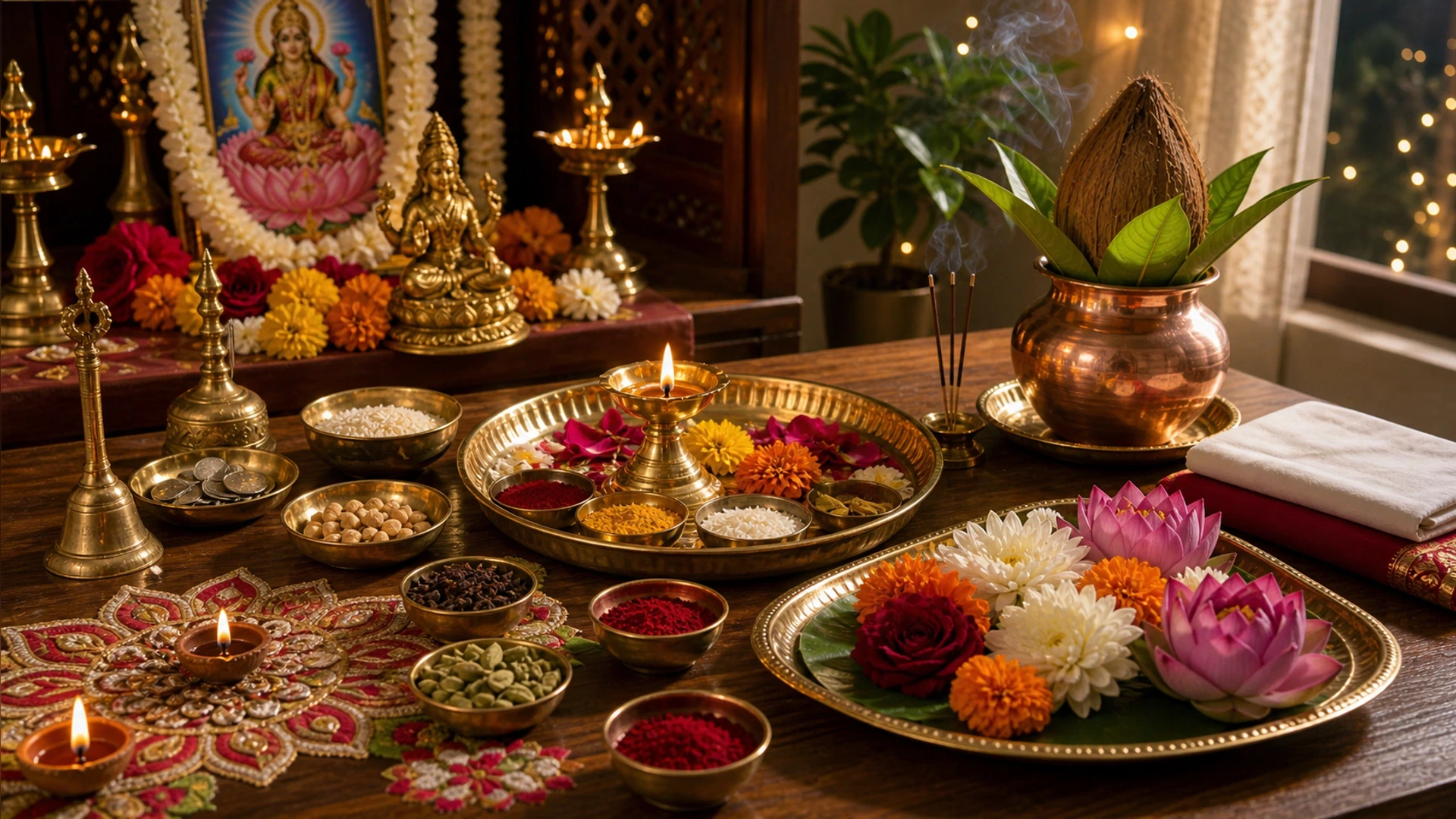
The kit is useful when it covers diya, cotton wicks, kumkum, haldi, akshat, incense, camphor, kalash support, and common offerings. It should also remind users to check Lakshmi Puja muhurat locally.
The best way to choose a kit is to work backward from the ritual. Ask what will happen at the altar: sankalpa, Ganesha invocation, kalash or deity puja, offerings, aarti, naivedya, and completion. Then match the samagri to that flow. This keeps the page useful for devotees and prevents product-first advice.
Core Samagri To Check
- Diya and wicks: central for Diwali worship and evening light offering
- Kumkum, haldi, akshat: basic puja markings and offerings
- Lakshmi-Ganesha focus: many homes worship both together on Diwali night
- Fresh naivedya: sweets and fruits are best arranged close to the puja
How To Use This Guide Before Buying
- Confirm the date, tithi, or festival window with Daily Panchang.
- Check whether your family uses a special deity mantra, vrat katha, or regional offering.
- Compare the kit contents against the actual puja sequence, not only the title.
- Add perishables such as flowers, fruits, milk, curd, or sweets locally when freshness matters.
- Keep a small backup of common items: camphor, cotton wicks, ghee, incense, akshat, kumkum, and matchbox.
Useful Internal Links
- Diwali Lakshmi Puja meaning
- Lakshmi Puja guide
- Rama returns to Ayodhya story
- Daily Panchang
- Lakshmi Puja Kit
What Not To Overclaim
Puja kits should not promise blessings, guaranteed results, exact ritual correctness, or universal rules. The same festival may be observed differently in Maharashtra, Tamil Nadu, Bengal, Gujarat, Andhra-Telangana, North India, Nepal-linked households, or diaspora homes. A helpful kit guide should make the devotee more prepared and less anxious.
Simple Home Checklist
Keep this final check gentle: clean altar, diya, incense, water, flowers, naivedya, aarti item, deity image or murti, and any vrata-specific item. If a priest is coming, ask them what they will bring and what the family should arrange. If you are doing a simple home puja, use the kit as support and keep the worship sincere.
Quality And Storage Checks
Before placing an order, check whether the kit separates edible, fragrant, powder, and fragile items properly. Kumkum, turmeric, rice, wicks, camphor, incense, and flowers should not be treated as interchangeable fillers. If the page or seller cannot explain what is inside, the kit is not helping the devotee make a confident choice.
After the puja, store reusable items respectfully. Keep bell, diya, kalash, cloth, and books clean and separate. Dispose of flowers, leaves, and naivedya according to local custom and environmental common sense. This small after-care section matters because a good samagri guide should help the whole worship cycle: planning, puja, and respectful completion.
For repeat observances, write down what was actually used and what remained unopened. That small note makes the next puja cheaper, cleaner, and more focused. It also helps PujaKit keep kit guides attached to real devotional intent rather than pushing excess items.
When To Ask A Priest
Ask a priest or family elder when the ritual includes havan, sankalpa for a specific life event, vrata udyapan, temple-style abhishek, house-entry muhurat, or a family promise made earlier. A kit can provide items; it cannot decide lineage rules, pronunciation, sequence, or the right level of austerity for a household.
FAQ
Is a kit mandatory?
No. A kit is a convenience. If your family already has the required samagri, you can perform the puja without buying a new box.
Can one kit work for every region?
Not completely. A core kit can cover common items, but regional offerings, naivedya, flowers, and mantra sequences may differ.
Should I buy perishables online?
Usually no. Flowers, fruits, milk products, and fresh leaves are often better arranged locally close to the puja time.