- Published
- Published 24 May 2026
- Reviewed
- Reviewed 28 May 2026
- Reading time
- 27 min read
- Sources
- 8 sources
Index
- Quick Answer: Important Hindu Festival Dates in 2026
- How to Read This Calendar Page
- What Makes a Sanatan Calendar Different?
- A Short History of the Hindu Calendar
- Sanatan Panchang 2026: The Five Limbs
- How Hindu Festival Dates Are Actually Chosen
- Month-Wise Hindu Festival Calendar 2026
- January 2026
- February 2026
- March 2026
- April 2026
- May and June 2026
- July to December 2026
- Ekadashi, Amavasya, Purnima, Pradosh, Sankranti, and Grahan
- Why Some 2026 Dates Look Different Across Calendars
- 2026 Special Note: Adhika Jyeshtha Masa
- The Twelve Lunar Months in the Hindu Panchang
- Why Prayer and Vrat Matter Through the Year
- Regional Calendar Terms People Search For
- Amanta vs Purnimanta: Why Month Names Differ
- How to Use This Calendar at Home
- Festival Calendar vs Panchang vs Muhurat
- What Details a Complete 2026 Hindu Calendar Should Include
- What to Prepare for Major 2026 Festivals
- How to Confirm a Festival Date Properly
- Why Follow a Sanatan Dharma Calendar in 2026?
- FAQ
- What is the Sanatan Dharma Calendar 2026?
- Is the Hindu Calendar 2026 the same as Panchang?
- Why do Hindu festival dates change every year?
- What is special about Adhika Maas in 2026?
- What are the Hindu lunar months in order?
- How should I use this calendar for puja planning?
- Is Diwali in October or November in 2026?
- Is Holi on March 3 or March 4 in 2026?
- Is Nirjala Ekadashi on May 27 or June 25 in 2026?
- Which Hindu festivals are most important in 2026?
- Where should I check today's tithi?
- Planning With Images And Panchang
The Sanatan Dharma Calendar 2026 is more than a yearly date list. For a Hindu household, it is the practical bridge between the Gregorian calendar on the wall and the living rhythm of tithi, vrat, puja, sankranti, moonrise, sunrise, festival preparation, and daily Panchang.
If you searched for Hindu Calendar 2026 Sanatan Dharma, Sanatan Panchang 2026, Sanatani Calendar 2026, Shree Sanatan Dharma Calendar 2026, or a complete Hindu Festival Calendar 2026, the need is usually the same: you want the right date, the right context, and enough guidance to prepare without confusion.
PujaKit keeps those pieces connected. Use the Calendar to see the festival day, the Daily Panchang to check the local tithi and timings, and the Muhurat Finder when the actual worship window matters.
Quick Answer: Important Hindu Festival Dates in 2026
For year planning, start with the major dates below. For strict fasting, parana, grahan rules, moonrise, Lakshmi Puja, Chhath arghya, or any city-specific observance, confirm the local Panchang close to the day.
| Festival | 2026 date | What to plan |
|---|---|---|
| Makar Sankranti, Pongal | January 14 | Til, jaggery, rice, Surya offerings, and harvest-season family puja. |
| Vasant Panchami | January 23 | Saraswati puja for learning, music, books, and children. |
| Maha Shivaratri | February 15 | Night worship, Shiva abhishek, fasting, bilva leaves, and jagaran. |
| Holi | March 3-4 | Holika Dahan on March 3; Rangwali Holi on March 4 in the PujaKit India calendar. |
| Chaitra Navratri | March 19-27 | Ghatasthapana, Devi puja, fasting food, and Rama Navami preparation. |
| Rama Navami | March 26 | Rama janmotsav, Ramayana path, fasting, and temple darshan. |
| Hanuman Jayanti | April 2 | Hanuman Chalisa, sindoor offering, strength-oriented upasana, and prasad. |
| Akshaya Tritiya | April 19 | Vishnu-Lakshmi worship, dana, new beginnings, and auspicious buying. |
| Nirjala Ekadashi | May 27 | Vishnu vrat and parana planning; see the Ekadashi note below for adhika masa differences. |
| Guru Purnima | July 29 | Guru puja, study, gratitude, dakshina, and ashram or temple visits. |
| Raksha Bandhan | August 28 | Rakhi, family worship, protection prayers, and travel planning. |
| Krishna Janmashtami | September 4 | Midnight Krishna worship, fasting, cradle decoration, and bhog. |
| Ganesh Chaturthi | September 14 | Ganpati sthapana, modak, durva, daily puja, and visarjan planning. |
| Sharad Navratri | October 11-19 | Nine nights of Devi worship, fasting, kanya puja, and Dussehra preparation. |
| Durga Puja | October 16 onward | Mahashashthi, pandal visits, Devi worship, bhog, and regional calendar checks. |
| Dussehra | October 20 | Vijayadashami, shastra puja, dharma remembrance, and new learning. |
| Karva Chauth | October 29 | Nirjala vrat, sargi, puja thali, and moonrise timing. |
| Diwali | November 8 | Lakshmi Puja muhurat, diyas, sweets, cleaning, rangoli, and samagri. |
| Chhath Puja | November 15-16 | Sandhya Arghya, Usha Arghya, strict purity, thekua, and riverbank planning. |
| Tulsi Vivah | November 21 | Tulsi-Shaligram wedding, Kartik worship, and the opening of vivah season. |
| Vaikuntha Ekadashi | December 20 | Vishnu worship, temple darshan, fasting, and crowd planning. |
This table is useful for family calendars, temple events, school leave, travel, and early shopping. It is not a substitute for daily Panchang when the ritual has a precise rule.
Video Guide
How to Read This Calendar Page
Most people come to a 2026 Hindu calendar with one of four questions. The answer changes depending on what you are trying to do.
| Search intent | What you probably need | Best PujaKit path |
|---|---|---|
| "Hindu festival calendar 2026" | A month-wise list of major festivals and vrats. | Start with this page or the Calendar. |
| "Today tithi" or "Aaj ka Panchang" | Local tithi, nakshatra, yoga, karana, sunrise, and rahu kal. | Use the Daily Panchang. |
| "Diwali muhurat 2026" or "Lakshmi Puja time" | A city-specific worship window, usually not just the date. | Use the Muhurat Finder close to the festival. |
| "Ekadashi parana time" | The correct Dwadashi fast-breaking window. | Check the local Panchang and follow your family tradition. |
| "Why is this festival on two dates?" | Tithi overlap, sunrise rule, regional practice, or calendar-system difference. | Read the date-difference section below before assuming an error. |
The practical flow is simple: mark the date first, then check the Panchang before the ritual, then choose the muhurat if the timing itself is important.
What Makes a Sanatan Calendar Different?
A simple date list tells you what comes next. A Sanatan Hindu Calendar 2026 tells you why the day matters, which tithi or solar transition is active, and how a devotee can prepare with attention instead of rushing.
In Sanatana Dharma, many observances are tied to the Moon, the Sun, nakshatra, sunrise, sunset, and local tithi. That is why Hindu festivals move against the Gregorian calendar. Diwali may fall in October in one year and November in another. Holi may sit in late February or March. Janmashtami, Ekadashi, Amavasya, Purnima, Pradosh, Navratri, and Chhath all depend on Panchang logic rather than a fixed date.
A good Hindu Dharmic Calendar 2026 should therefore do three jobs:
| Need | Calendar answer | Panchang answer |
|---|---|---|
| What day is the festival? | Shows the Gregorian date. | Explains the tithi or solar transition behind it. |
| When should I worship? | Gives a planning date. | Gives muhurat, sunrise, sunset, moonrise, rahu kal, and local timings. |
| What should I prepare? | Names the festival. | Helps decide fasting, parana, samagri, sankalpa, and regional rules. |
That is why this guide connects festival guides, Panchang, Muhurat, and Answer pages. A family should be able to move from date to meaning to preparation without losing the thread.
A Short History of the Hindu Calendar
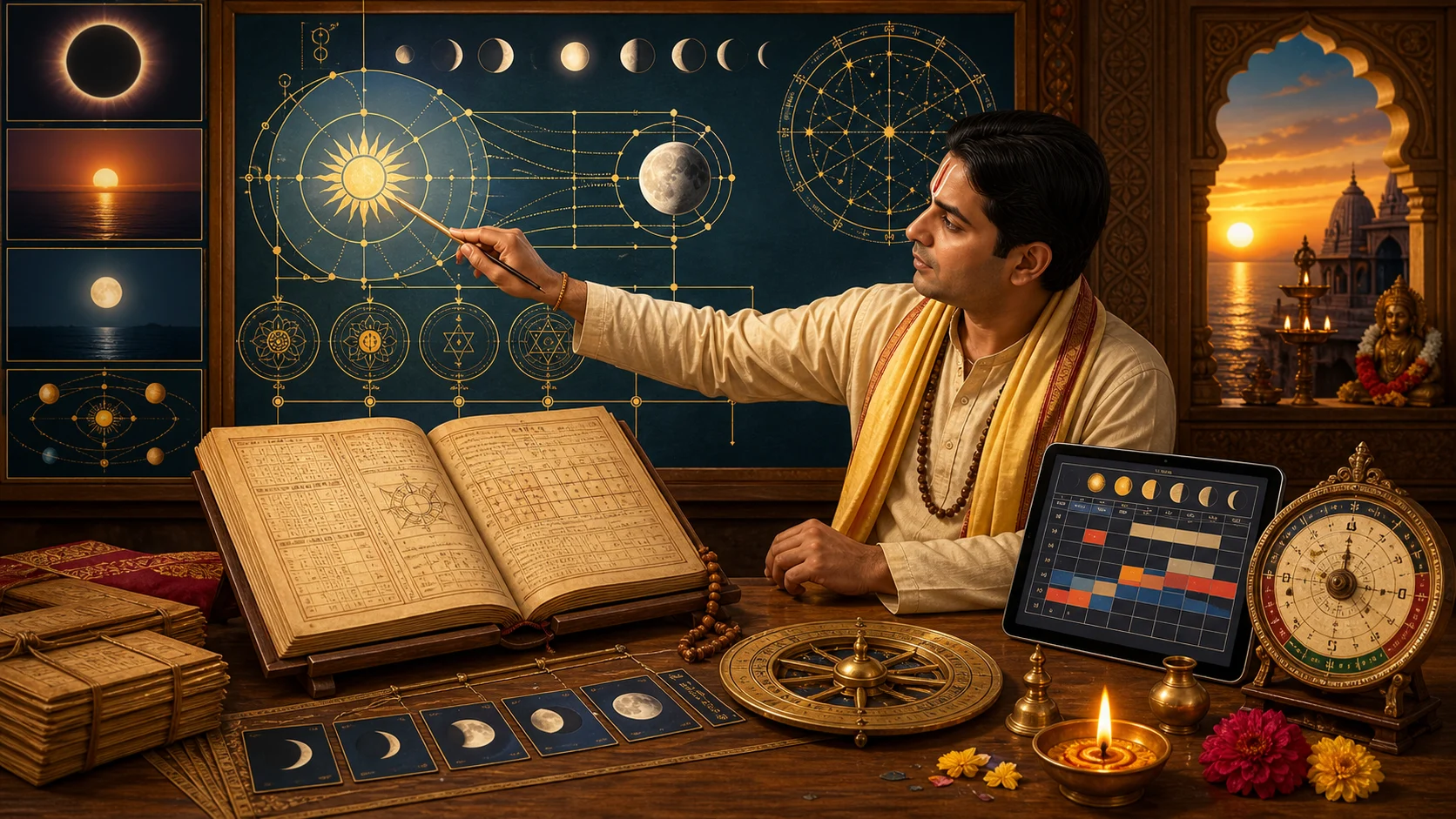
The Hindu calendar is often described as lunisolar: it respects the Moon's cycle through tithis and pakshas, while also keeping the year aligned with the Sun, seasons, and sankrantis. That combination is why some festivals are lunar and movable, while solar festivals such as Makar Sankranti, Vishu, Puthandu, and Baisakhi remain close to the same Gregorian date each year.
In older households, the Panchang was a printed almanac consulted by elders, priests, astrologers, and temple committees. Today the same need continues through apps and websites, but the responsibility is the same: the date must respect tithi, place, sunrise, regional tradition, and the purpose of the observance.
The word Panchang itself points to the five-limb structure of time. A calendar gives the date; Panchang gives the texture of the day. For a devotee, that texture matters because Hindu worship is not only about doing the ritual, but doing it at a time that honors the nature of the observance.
Sanatan Panchang 2026: The Five Limbs
The word Panchang refers to the five limbs used to understand the quality of a day. When people say Sanatan Panchang 2026 or Sanatana Panchangam, they are usually looking for this deeper layer beneath the festival list.
| Panchang limb | Meaning | How it helps a devotee |
|---|---|---|
| Tithi | Lunar day, based on the Moon's distance from the Sun | Decides most vrats, Ekadashi, Amavasya, Purnima, Navratri days, and festival observances. |
| Vara | Weekday | Helps with weekday vrats, deity associations, and traditional remedies. |
| Nakshatra | Lunar mansion through which the Moon is moving | Used in muhurat, samskara planning, and many temple traditions. |
| Yoga | A Sun-Moon calculation used in Panchang | Helps judge the auspicious or difficult quality of time. |
| Karana | Half-tithi division | Used for finer timing and ritual calculation. |
For everyday users, tithi is the most visible limb because it decides many festivals. But the other four matter when choosing a muhurat, checking a wedding date, planning griha pravesh, or arranging a serious puja.
How Hindu Festival Dates Are Actually Chosen
One reason Hindu calendar pages become confusing is that different festivals use different parts of the day. A tithi may begin after sunrise, continue through sunset, or end before the usual puja window. That means the correct ritual date is not always the date on which the tithi first appears.
| Rule or timing idea | Where it matters | Plain meaning |
|---|---|---|
| Udaya tithi | Many vrats and day observances | The tithi present at sunrise often receives priority. |
| Madhyahna vyapini | Some jayantis and midday rituals | The tithi should be present during the middle part of the day. |
| Pradosh kaal | Diwali, Pradosh Vrat, evening Shiva and Lakshmi worship | The tithi and auspicious window around sunset/evening matter. |
| Nishita kaal | Maha Shivaratri and some night observances | The late-night worship window becomes important. |
| Moonrise | Karva Chauth, Sankashti Chaturthi, some fasting observances | The visible moon timing affects the vrat conclusion. |
| Parana | Ekadashi and other fasts | The fast should be broken during the proper next-day window. |
| Visibility | Grahan observances | Eclipse rules depend on whether the grahan is visible in your region. |
This is why the same festival can look "wrong" when copied from another city. A 2026 Sanatan calendar should not only list the day; it should also explain which type of timing controls the observance.
For household use, the safest pattern is: use the yearly list to prepare, then use your local Panchang for the final rule. For temple events, add one more layer: confirm the temple's own sampradaya and local tradition before printing announcements.
Month-Wise Hindu Festival Calendar 2026
The list below focuses on Hindu festivals, vrats, Panchang observances, and Sanatana Dharma celebrations. It is written for devotees who want dates, meaning, preparation notes, and clear next steps for worship.
January 2026
January opens the year with Sankranti, Saraswati worship, and Magha-season observances. It is a good time to arrange til, jaggery, rice, books for Saraswati puja, and Surya offerings.
Spiritually, January is a month of steadiness and restart. Makar Sankranti turns attention toward Surya, harvest gratitude, dana, and discipline. Vasant Panchami softens the season with Saraswati worship, making it a natural day for students, artists, musicians, writers, and families beginning a new learning habit.
| Date | Festival or observance |
|---|---|
| January 6 | Sakat Chauth |
| January 13 | Lohri |
| January 14 | Makar Sankranti, Pongal, Makar Vilakku |
| January 18 | Mauni Amavasya |
| January 23 | Vasant Panchami |
| January 25 | Rath Saptami |
| January 26 | Bhishma Ashtami |
February 2026
February is quieter, but it carries one of the most important nights for Shiva devotees. If your household observes Maha Shivaratri, do not leave bilva leaves, milk, curd, honey, ghee, water, fruits, incense, and the abhishek vessel for the last day.
The focus here is tapas and inner stillness. Maha Shivaratri is not only a festival night; it is a night of wakefulness, japa, abhishek, fasting, and turning inward. Devotees often pray for purification, self-control, marital harmony, spiritual clarity, and the courage to let go of habits that disturb the mind.
| Date | Festival or observance |
|---|---|
| February 13 | Kumbh Sankranti |
| February 15 | Maha Shivaratri |
| February 17 | Surya Grahan - check local visibility |
March 2026
March is a major turn in the Hindu calendar. Holi closes the Phalguna festive arc, then Chaitra begins a new year season for many regions. Families observing Navratri should prepare fasting grains, fruits, Devi samagri, kalash items, and a clean altar.
This month carries both release and renewal. Holi burns old negativity through Holika Dahan and celebrates color, forgiveness, community, and bhakti. Chaitra Navratri then begins a fresh devotional cycle with Devi worship, fasting, discipline, and Rama Navami, making March one of the most searched months in any Hindu Calendar 2026.
| Date | Festival or observance |
|---|---|
| March 3 | Holika Dahan, Chandra Grahan |
| March 4 | Rangwali Holi |
| March 11 | Sheetala Ashtami |
| March 15 | Meena Sankranti; Papamochani Ekadashi |
| March 19 | Chaitra Navratri, Gudi Padwa / Ugadi |
| March 21 | Gangaur, Gauri Puja |
| March 24 | Yamuna Chhath |
| March 26 | Rama Navami |
| March 27 | Swaminarayan Jayanti |
April 2026
April brings jayantis, regional solar new years, and Vishnu-Hanuman-Ganga worship. It is also a month where one date may carry several regional names, so the calendar should preserve the local identity rather than flatten everything into one label.
April is also a month of strength and auspicious beginnings. Hanuman Jayanti is associated with courage, service, celibacy of mind, protection, and devotion to Shri Rama. Akshaya Tritiya is searched heavily because families connect it with dana, Lakshmi-Narayana worship, new ventures, purchases, and actions believed to carry lasting merit.
| Date | Festival or observance |
|---|---|
| April 2 | Hanuman Jayanti; Chaitra Purnima |
| April 14 | Baisakhi, Bohag Bihu, Vishu, Puthandu, Mesha Sankranti |
| April 19 | Akshaya Tritiya, Parashurama Jayanti |
| April 23 | Ganga Saptami |
| April 25 | Sita Navami |
| April 30 | Narasimha Jayanti |
May and June 2026
May and June contain Ganga worship, Vat Savitri, Shani Jayanti, Ekadashi observances, and early monsoon-season preparation. These months also show why date names need careful review in an adhika masa year.
The spiritual mood here is restraint, water charity, and Vishnu-centered devotion. Ganga Dussehra turns attention toward purification and sacred rivers. Vat Savitri and Vat Purnima honor marital devotion and the Savitri-Satyavan story. In 2026, the presence of Adhika Jyeshtha also makes this period important for extra japa, dana, scripture reading, and careful Ekadashi checking.
| Date | Festival or observance |
|---|---|
| May 2 | Narada Jayanti |
| May 15 | Vrishabha Sankranti |
| May 16 | Vat Savitri, Shani Jayanti |
| May 25 | Ganga Dussehra |
| May 27 | Nirjala Ekadashi in the PujaKit India calendar; confirm local parana |
| June 15 | Mithuna Sankranti |
| June 29 | Vat Purnima |
July to December 2026
The second half of 2026 is the main festival arc for many families: Shravan, Janmashtami, Ganesh Chaturthi, Pitru Paksha, Navratri, Durga Puja, Dussehra, Diwali, Chhath, Tulsi Vivah, and Kartik Purnima.
July begins a devotional climb with Rath Yatra, Shravan, Shiva worship, and Guru Purnima. August and September bring Krishna bhakti, Ganesha worship, and family festivals. October and November become the most intense season of the year, moving from ancestors and Devi worship to victory, lamps, Lakshmi Puja, Chhath, Tulsi Vivah, and Kartik Purnima.
| Month | Key dates |
|---|---|
| July | Rath Yatra - July 16; Shravan Somvar begins July 20; Dev Shayani Ekadashi - July 25; Guru Purnima - July 29 |
| August | Hariyali Teej - August 15; Nag Panchami - August 17; Onam - August 26; Raksha Bandhan - August 28; Kajari Teej - August 31 |
| September | Krishna Janmashtami - September 4; Ganesh Chaturthi and Hartalika Teej - September 14; Vishwakarma Puja - September 17; Anant Chaturdashi - September 25; Pitru Paksha begins September 27 |
| October | Mahalaya - October 10; Navratri begins October 11; Durga Puja begins October 16; Dussehra - October 20; Sharad Purnima - October 25; Karva Chauth - October 29 |
| November | Dhanteras - November 6; Diwali, Kali Puja, and Naraka Chaturdashi - November 8; Govardhan Puja - November 10; Bhai Dooj - November 11; Chhath Puja - November 15-16; Tulsi Vivah - November 21; Kartik Purnima - November 24 |
| December | Vivah Panchami - December 14; Geeta Jayanti and Vaikuntha Ekadashi - December 20 |
Ekadashi, Amavasya, Purnima, Pradosh, Sankranti, and Grahan
A complete Hindu Calendar Sanatan Panchang is not finished after the big festivals. Many households plan their month around repeated observances. These are the days that quietly shape the devotional year.
| Observance | What it means | What to check |
|---|---|---|
| Ekadashi | Vishnu vrat on the eleventh lunar day | Fasting date, parana window, Vaishnava or Smarta tradition, and local sunrise. |
| Amavasya | New Moon day | Tarpan, dana, Shiva or Devi worship, and regional rules. |
| Purnima | Full Moon day | Satyanarayana puja, Guru worship, snan, dana, and monthly vows. |
| Pradosh Vrat | Shiva vrat around trayodashi evening | Sunset-based pradosh kaal and local temple timings. |
| Sankranti | Solar transition from one rashi to another | Punya kaal, dana, snan, and regional harvest or new year observance. |
| Grahan | Solar or lunar eclipse | Visibility, sutak, mantra japa, snan, dana, and regional guidance. |
The safest rule is simple: use the year calendar for planning, then verify the daily Panchang before the ritual. This is especially important for Ekadashi and grahan.
Why Some 2026 Dates Look Different Across Calendars
Not every date difference is a mistake. A responsible Hindu calendar should separate three things:
| Difference type | Example | What to do |
|---|---|---|
| Location difference | A tithi may touch sunrise in one city but not another. | Use the city-specific Panchang. |
| Ritual-rule difference | Smarta, Vaishnava, and regional traditions may observe a vrat differently. | Follow your family or sampradaya. |
| Data or naming issue | A festival name is attached to the wrong tithi, month, or adhika masa context. | Review source, tithi, and naming before publishing. |
The Nirjala Ekadashi confusion in 2026 is a good example. Some Panchang sources identify May 27, 2026 as an Ekadashi in Adhika Jyeshtha and list the traditional named Nirjala Ekadashi later; other search results and household calendars surface May 27. For a strict vrat, the correct approach is to check the local Panchang and the tradition your family follows, especially the parana window.
This is why the Daily Panchang matters. A date copied from a broad website is not enough when the observance depends on tithi, sunrise, parana, or moonrise.
2026 Special Note: Adhika Jyeshtha Masa
The year 2026 has an Adhika Jyeshtha Masa, often called Adhik Maas, Purushottam Maas, or the extra lunar month. Several Panchang references place this extra month roughly from May 17 to June 15, 2026, though users should still check their regional calendar.
Adhika masa exists because the lunar year is shorter than the solar year. The extra month helps keep the lunar festival cycle aligned with the seasons over time. For devotees, this is not just a technical adjustment. Many families treat Purushottam Maas as a time for Vishnu or Krishna worship, japa, dana, vrata, scripture reading, and quieter spiritual discipline.
It also explains why 2026 can look unusual around May and June:
| 2026 confusion point | Why it happens |
|---|---|
| Jyeshtha appears twice | One is Adhika Jyeshtha and the other is the regular, or nija, Jyeshtha cycle. |
| Ekadashi names may look different | Some Ekadashi names are tied to the regular lunar month, while adhika masa has its own Ekadashi observances. |
| Festival pages may disagree | One source may show a tithi date, another may show the traditional named festival date, and another may show a public search result. |
| Regional calendars may not present it the same way | Solar calendar traditions and lunar calendar traditions do not always name months the same way. |
This is one of the strongest reasons to build a multilingual calendar carefully. The English, Hindi, Bengali, Marathi, Tamil, and Telugu versions should not merely translate words; they should preserve the correct calendar logic for the region and tradition.
During Purushottam Maas, many devotees increase Vishnu Sahasranama recitation, Bhagavad Gita reading, simple mantra japa, sattvic food discipline, temple visits, dana, and seva. It is generally treated as a month for spiritual accumulation rather than showy celebration.
The Twelve Lunar Months in the Hindu Panchang
The Sanatan Dharma Calendar follows the sacred flow of lunar months. The exact Gregorian overlap changes every year, and regional calendars may use Amanta or Purnimanta month reckoning, but the month names remain central to how devotees understand the year.
| Lunar month | Spiritual flavor | Common festival context |
|---|---|---|
| Chaitra | Renewal, Nav Samvatsar, Devi worship | Chaitra Navratri, Gudi Padwa, Ugadi, Rama Navami |
| Vaishakh | Dana, Vishnu worship, sacred bathing | Akshaya Tritiya, Parashurama Jayanti, Ganga Saptami |
| Jyeshtha | Heat-season discipline, water charity, Vishnu vrat | Ganga Dussehra, Ekadashi observances, Vat Savitri traditions |
| Ashadha | Guru devotion and Chaturmas preparation | Rath Yatra, Dev Shayani Ekadashi, Guru Purnima |
| Shravan | Shiva worship, fasting, rain-season devotion | Shravan Somvar, Nag Panchami, Raksha Bandhan in many calendars |
| Bhadrapada | Krishna, Ganesha, and community worship | Janmashtami, Ganesh Chaturthi, Anant Chaturdashi |
| Ashwin | Devi worship, ancestors, victory of dharma | Pitru Paksha, Navratri, Durga Puja, Dussehra |
| Kartik | Lamps, Lakshmi, Tulsi, snan, and devotion | Karva Chauth, Diwali, Chhath, Tulsi Vivah, Kartik Purnima |
| Margashirsha | Gita, Vishnu devotion, early winter sadhana | Geeta Jayanti, Mokshada or Vaikuntha Ekadashi traditions |
| Paush | Simplicity, discipline, winter observances | Regional vrats and preparatory worship |
| Magh | Snan, dana, Saraswati, Surya worship | Mauni Amavasya, Vasant Panchami, Rath Saptami |
| Phalgun | Color, devotion, Shiva, and seasonal closure | Maha Shivaratri, Holi, Phalguna Purnima |
This month-wise view is what turns a Hindu Sanatan Calendar 2026 from a search page into a real planning companion.
Why Prayer and Vrat Matter Through the Year
The purpose of a Sanatan calendar is not only to remember festivals. It helps distribute devotion across the year so spiritual life does not appear only on Diwali or Navratri.
| Practice | What it builds | Where it appears in the 2026 calendar |
|---|---|---|
| Fasting or vrat | Discipline, restraint, sankalpa, and remembrance | Ekadashi, Maha Shivaratri, Navratri, Karva Chauth, Pradosh |
| Dana | Generosity and humility | Makar Sankranti, Akshaya Tritiya, Amavasya, Purnima, Adhika Maas |
| Japa and path | Mental steadiness and devotional depth | Shravan, Purushottam Maas, Guru Purnima, Kartik, Gita Jayanti |
| Puja and aarti | Family worship and deity connection | Diwali, Ganesh Chaturthi, Lakshmi Puja, Saraswati Puja, daily vrata days |
| Snan and purity | Renewal, sacred discipline, and respect for the body-mind | Ganga Dussehra, Kartik Snan, Mauni Amavasya, Chhath |
| Temple darshan | Community devotion and humility | Janmashtami, Guru Purnima, Vaikuntha Ekadashi, Shivaratri, Navratri |
This is why people search not only for "festival date 2026" but also for "why celebrate," "what to do," "what to offer," "which mantra," "what is the vrat katha," and "what is the parana time." A useful calendar should answer the date first, then guide the devotee toward meaning and practice.
Regional Calendar Terms People Search For
The same sacred calendar is known by different names across India and the Hindu diaspora. A good multilingual content system should support these names instead of forcing every user into one vocabulary.
| Term people may search | Common context | What it means for PujaKit content |
|---|---|---|
| Panchang | North and West Indian usage | Daily Hindu almanac with tithi, nakshatra, yoga, karana, and vara. |
| Panchangam | South Indian usage | Same core idea, often used in Telugu, Kannada, Tamil, and Malayalam contexts. |
| Panjika or Panji | Bengal, Odisha, Assam, and eastern traditions | Regional almanac presentation, often with local festival naming. |
| Patra or Maithili Panchang | Mithila and nearby regions | Regional Panchang tradition used for festivals, samskaras, and muhurat. |
| Vikram Samvat | North and western Indian Hindu year system | Often used with Chaitra or Kartik new year traditions depending on region. |
| Shaka Samvat | Indian national calendar and some traditional references | Another year-counting system used alongside regional calendars. |
| Amanta calendar | Month ends at Amavasya | Common in much of South and West India. |
| Purnimanta calendar | Month ends at Purnima | Common in many North Indian Panchang traditions. |
This matters for readers because a devotee may search "Sanatan Panchang 2026," "Hindu Panchangam 2026," "Bengali Panjika 2026," or "Vikram Samvat 2083 festivals" and still be looking for the same spiritual planning problem. The content should meet them in their language while keeping the underlying date logic consistent.
Amanta vs Purnimanta: Why Month Names Differ
Amanta and Purnimanta are two traditional ways of counting lunar months. They usually agree on the festival tithi, but the month name can differ, especially during Krishna Paksha.
| Calendar system | Month ending | Common regions | User-facing impact |
|---|---|---|---|
| Amanta | Amavasya, the New Moon | Maharashtra, Gujarat, Andhra, Karnataka, and many South Indian traditions | A festival may be described under one lunar month name. |
| Purnimanta | Purnima, the Full Moon | Many North Indian traditions | The same tithi may be described under a different month name. |
For most users, this does not mean the festival is being celebrated twice. It means the calendar is naming the lunar month differently. This is why PujaKit should show the date clearly, then explain the month system when it affects interpretation.
How to Use This Calendar at Home
The best calendar is the one that makes your preparation calmer.
| Time before festival | What to do |
|---|---|
| Two weeks before | Check samagri, fasting rules, family travel, temple plans, pandit booking, and special food preparation. |
| One week before | Confirm the date for your city, especially for vrat, moonrise, parana, grahan, or muhurat. |
| One day before | Clean the altar, arrange offerings, prepare naivedya, keep sankalpa details ready, and review the puja sequence. |
| Festival day | Open the Daily Panchang, confirm timing, perform puja with shraddha, and avoid rushing the ritual. |
For example, Diwali should be planned well before November because cleaning, rangoli, diyas, sweets, gifts, and Lakshmi Puja samagri all take time. Ganesh Chaturthi needs murti selection, sthapana space, daily worship, and visarjan planning. Chhath Puja needs stricter preparation, food discipline, and arghya timing.
Festival Calendar vs Panchang vs Muhurat
These three tools often get mixed together, but they answer different questions.
| Tool | Best for | Example |
|---|---|---|
| Calendar | Knowing the date | Diwali is shown on November 8, 2026. |
| Panchang | Understanding the day | Amavasya tithi, nakshatra, yoga, karana, rahu kal, sunrise, and moonrise. |
| Muhurat | Choosing the right window | Lakshmi Puja, griha pravesh, vehicle purchase, marriage, business opening, or travel. |
If you are just marking dates, the Calendar is enough. If you are fasting, breaking a fast, doing a home puja, or choosing a time, use the Panchang and Muhurat Finder as well.
What Details a Complete 2026 Hindu Calendar Should Include
When users search for a "complete Hindu calendar 2026," they usually expect more than festival names. A useful calendar should answer both spiritual and practical questions.
| Detail | Why people search for it | How to use it |
|---|---|---|
| Tithi start and end | To know whether a vrat belongs to the current sunrise day. | Check before Ekadashi, Amavasya, Purnima, Pradosh, and jayantis. |
| Nakshatra | To understand the day's quality and plan samskaras or muhurats. | Useful for naming, marriage, griha pravesh, and temple events. |
| Sunrise and sunset | Hindu day reckoning often depends on sunrise, and evening puja depends on sunset. | Essential for Panchang, pradosh, arghya, and daily timing. |
| Moonrise | Some vrats conclude only after moon sighting or moonrise. | Important for Karva Chauth, Sankashti, and regional vrata rules. |
| Rahu kal and gulika kal | People avoid beginning important work in these periods. | Helpful for travel, purchases, and routine planning. |
| Abhijit muhurat | A commonly searched auspicious daytime window. | Use carefully, because some days and rituals still need specific rules. |
| Choghadiya | Popular quick muhurat system in many communities. | Useful for everyday decisions, but not a replacement for major muhurat. |
| Parana | Fast-breaking window. | Essential for Ekadashi and other strict fasting observances. |
This is why a serious Sanatan Dharma calendar should be connected to Panchang and muhurat tools instead of standing alone as a static table.
What to Prepare for Major 2026 Festivals
Here is a quick household checklist for the busiest parts of the year.
| Festival season | Prepare early |
|---|---|
| Maha Shivaratri | Bilva leaves, water, milk, curd, honey, ghee, vibhuti, rudraksha, incense, fruits, and night worship plan. |
| Holi | Holika Dahan samagri, colors, sweets, family gathering plan, and safe celebration guidelines. |
| Chaitra Navratri | Kalash, coconut, mango leaves, red cloth, Devi flowers, akhand jyot setup, fasting food, and kanya puja items. |
| Janmashtami | Krishna jhula, makhan-mishri, tulsi, panjiri, bhog, night puja setup, and kirtan playlist. |
| Ganesh Chaturthi | Ganesha murti, durva, modak, red flowers, daily aarti setup, and visarjan plan. |
| Sharad Navratri and Dussehra | Devi altar, fasting food, garba or temple plans, kanya puja, shastra puja, and Vijayadashami offerings. |
| Diwali | Diyas, wicks, ghee or oil, Lakshmi-Ganesha images, kalash, sweets, flowers, rangoli, account books, and muhurat check. |
| Chhath Puja | Thekua ingredients, bamboo soop, fruits, clean vessels, vrat discipline, riverbank timing, and sunrise/sunset arghya plan. |
If you are new to a ritual, the Sankalpa Generator can help you begin the puja without guessing your sankalpa wording.
How to Confirm a Festival Date Properly
A yearly calendar is the starting point. Before a vrat, puja, parana, or muhurat, confirm the details in this order:
| Step | What to check | Why it matters |
|---|---|---|
| 1 | City or location | Tithi, sunrise, sunset, and moonrise are location-sensitive. |
| 2 | Tithi at the required time | Some festivals use sunrise, some use evening, some use midnight or moonrise. |
| 3 | Regional tradition | North Indian, South Indian, Bengali, Tamil, Telugu, Marathi, Gujarati, and diaspora calendars can present names differently. |
| 4 | Sampradaya rule | Smarta, Vaishnava, temple, and family traditions may handle certain vrats differently. |
| 5 | Parana or muhurat | The observance often depends on the closing window, not only the starting date. |
For Ekadashi, always look for parana. For Karva Chauth, check moonrise. For Diwali, check Lakshmi Puja muhurat. For Chhath, check sunset and sunrise arghya. For grahan, check visibility in your region.
Why Follow a Sanatan Dharma Calendar in 2026?
A Sanatana Calendar is not meant to make daily life complicated. It helps bring dharma into ordinary planning.
It helps families know when to fast, when to cook special food, when to prepare samagri, when to visit the temple, when to read a scripture, when to do dana, when to invite relatives, and when to pause for worship.
It also helps temples and spiritual groups plan pravachan, bhajan, seva, festival logistics, crowd flow, and volunteer schedules.
Most importantly, it keeps sacred time visible. A date on the calendar becomes a reminder: clean the altar, remember the deity, call the family, prepare the offering, and make space for the practice.
For a modern devotee, this matters because daily life is full of noise. The calendar quietly brings the year back to dharma: Shiva in Phalgun and Shravan, Devi in Chaitra and Ashwin, Vishnu through Ekadashi and Purushottam Maas, Lakshmi in Kartik, Surya at Sankranti, ancestors in Pitru Paksha, and the Guru principle at Guru Purnima.
FAQ
What is the Sanatan Dharma Calendar 2026?
The Sanatan Dharma Calendar 2026 is a Hindu calendar for festivals, vrats, tithis, Panchang observances, muhurat planning, and sacred months. It connects Gregorian dates with Hindu lunar and solar timing.
Is the Hindu Calendar 2026 the same as Panchang?
Not exactly. The calendar tells you the date of a festival or vrat. Panchang explains the day in detail through tithi, vara, nakshatra, yoga, karana, sunrise, sunset, moonrise, and other local timings.
Why do Hindu festival dates change every year?
Many Hindu festivals follow lunar tithi rather than fixed Gregorian dates. That is why Diwali, Holi, Janmashtami, Navratri, Ekadashi, Purnima, Amavasya, and Chhath shift from year to year.
What is special about Adhika Maas in 2026?
In 2026, Adhika Jyeshtha Masa is expected around May 17 to June 15 in many Panchang traditions. It is also called Purushottam Maas and is commonly used for Vishnu or Krishna worship, japa, dana, vrata, scripture reading, and quieter spiritual discipline.
What are the Hindu lunar months in order?
The twelve commonly listed lunar months are Chaitra, Vaishakh, Jyeshtha, Ashadha, Shravan, Bhadrapada, Ashwin, Kartik, Margashirsha, Paush, Magh, and Phalgun. Regional calendars may show month transitions differently because of Amanta and Purnimanta systems.
How should I use this calendar for puja planning?
Use the yearly calendar to mark the festival, then check the local Panchang for tithi, sunrise, moonrise, parana, and muhurat. After that, prepare samagri, altar space, fasting food, naivedya, and family or temple logistics.
Is Diwali in October or November in 2026?
Diwali falls on November 8, 2026 in the PujaKit India calendar. Lakshmi Puja timing should still be checked locally because the evening muhurat matters.
Is Holi on March 3 or March 4 in 2026?
Holika Dahan is on March 3, 2026, and Rangwali Holi is on March 4, 2026 in the PujaKit India calendar. Public holiday lists often show only the color-playing day.
Is Nirjala Ekadashi on May 27 or June 25 in 2026?
This guide currently highlights May 27, 2026 in the India festival calendar. Some Panchang sources label the May date differently because 2026 has an adhika masa context and place the traditional named Nirjala Ekadashi later. For a strict vrat, confirm the local Panchang, your family tradition, and the parana window before fasting.
Which Hindu festivals are most important in 2026?
The most widely planned festivals include Maha Shivaratri, Holi, Chaitra Navratri, Rama Navami, Hanuman Jayanti, Akshaya Tritiya, Guru Purnima, Raksha Bandhan, Janmashtami, Ganesh Chaturthi, Sharad Navratri, Dussehra, Karva Chauth, Diwali, Chhath Puja, Tulsi Vivah, and Vaikuntha Ekadashi.
Where should I check today's tithi?
Use the Daily Panchang. It is better than a yearly list when the question is about today's tithi, nakshatra, rahu kal, moonrise, parana, or local puja timing.
Planning With Images And Panchang
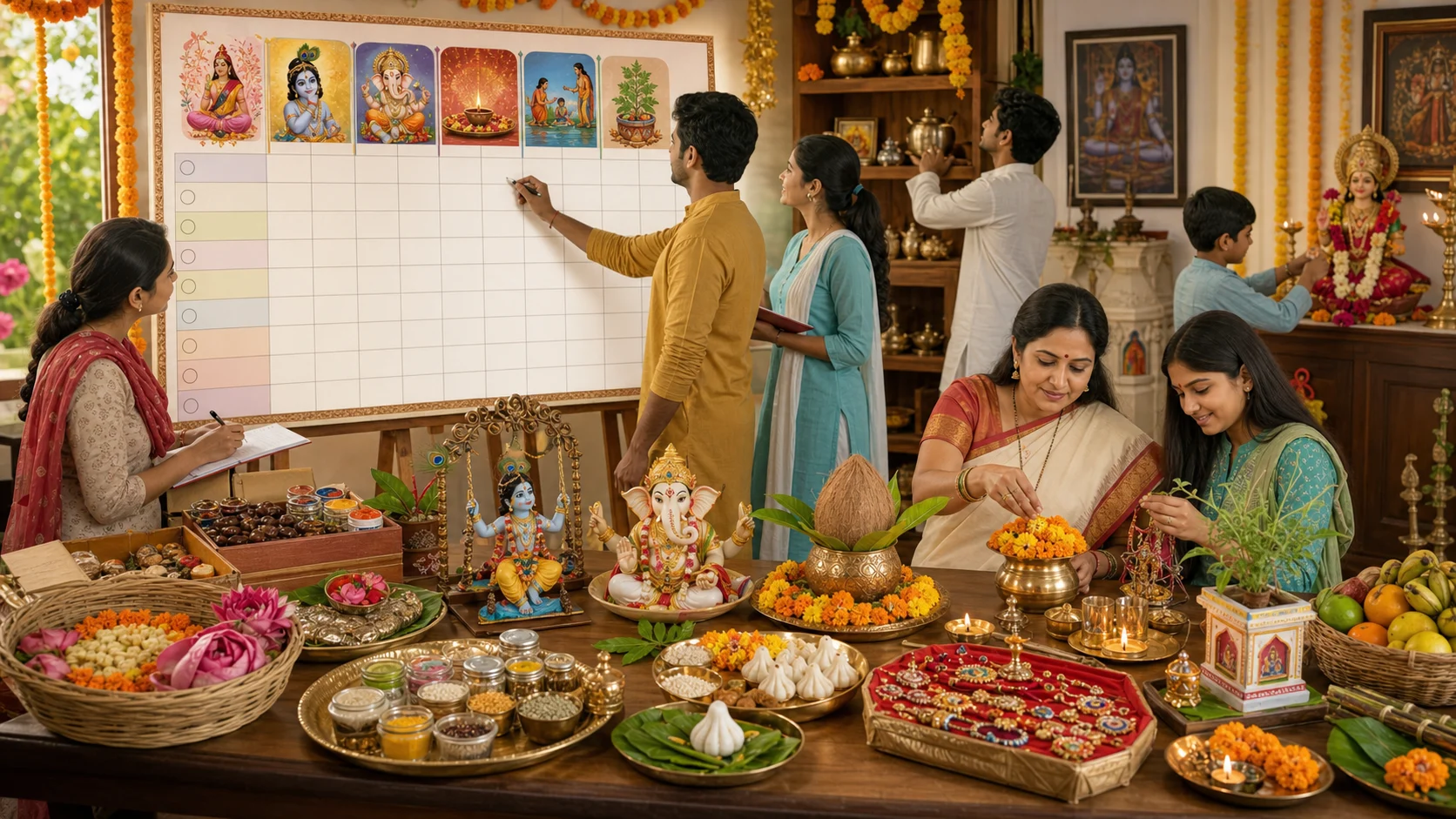
For practical use, pair this calendar with Daily Panchang, Moonrise Panchang, Aarti guide, Navratri Vrat, and Diwali Lakshmi Puja. Festival dates are easier to use when the family knows which observances need local tithi, moonrise, sunrise, or muhurat confirmation.