Composing…
Shakti Peeth
Chamundeshwari Temple, Chamundi Hill, Mysuru
चामुंडेश्वरी मंदिर, चामुंडी हिल, मैसूरु
Mysuru (Mysore), Karnataka
LocationKarnataka
ॐ
DeityMaa Chamundeshwari — slayer of Chanda, Munda, and Mahishasura; patron goddess of the Mysore Wadiyar dynasty
Darshan TimingsTiming updates in progress
EntryFree entry
Before You Go
Practical temple planning
Plan darshan, source checks, and puja help without assuming unofficial bookings or guaranteed access.
Darshan planning
Timing notes available
Temple open in three sessions: 7:30 AM–2:00 PM | 3:30 PM–6:00 PM | 7:30 PM–9:00 PM. Closed for midday break and brief evening break. Extended hours during Navratri/Dasara. Times approximate; verify locally.
Check sourceOfficial source
Use official links first
Use the temple or trust website before paying for seva, rooms, helicopter tickets, or special darshan.
Open official siteTemple contact
Sri Chamundeshwari Devi Trust (Muzrai Department, Government of Karnataka)
Listed contact: +91-821-2440066. Use it for current queue, entry, and seva questions.

Significance
Chamundeshwari is the patron deity of Mysuru and one of the most important goddess temples in South India. She is the Kula Devata (clan goddess) of the Mysore Wadiyar dynasty — Karnataka's historic royal family — and through that royal connection, has become the symbolic protectress of the entire Mysuru region and effectively of Karnataka as a state. The Dasara festival celebrated in her honour — the Mysuru Dasara (Nada Habba, "Festival of the Land") — is Karnataka's official state festival and one of India's most spectacular royal-era cultural celebrations, drawing national and international visitors and a television audience of tens of millions. The hill setting, the commanding presence of the temple on the horizon, the 1,008-step pilgrimage path, and the association with the slaying of the buffalo demon Mahishasura (who is said to have terrorised this very hill) give Chamundeshwari a place uniquely intertwined with the geography and identity of Mysuru.
“
सर्वमङ्गलमाङ्गल्ये शिवे सर्वार्थसाधिके। शरण्ये त्र्यम्बके गौरि नारायणि नमोऽस्तु ते॥
— देवी माहात्म्य
Pilgrim Context
Chamundeshwari Temple, Chamundi Hill, Mysuru is a Hindu sacred place in Mysuru (Mysore), Mysuru, Karnataka, connected with Maa Chamundeshwari — slayer of Chanda, Munda, and Mahishasura; patron goddess of the Mysore Wadiyar dynasty. As a Shakti Peeth, the shrine is approached through the living Shakta tradition of Devi worship, local goddess identity, Bhairava association, and festival-centered pilgrimage.
The temple's origins trace to the Hoysala dynasty period (roughly 10th–14th century CE), which built the foundation of the current structure. Hoysala rulers were great builders of temples across Karnataka and were devotees of both Shaiva and Vaishnava traditions; Chamundeshwari's association with the hill predates their patronage, however. During the Vijayanagara Empire period (14th–17th centuries), the temple received further attention and patronage as part of the empire's support for major Karnataka shrines. The decisive period of the temple's elevation to its current grandeur was under the Mysore Wadiyar dynasty, particularly from the 17th century onward when the Wadiyars consolidated control over the Mysuru region and made Chamundeshwari the centrepiece of their religious identity. Today the temple is administered by the Muzrai Department (Department of Hindu Religious Institutions and Charitable Endowments) of the Government of Karnataka — the agency that manages thousands of Hindu temples across the state. The temple and Chamundi Hill are also associated with the Karnataka Rakshana Parishat (tradition of regional identity) and with Mysuru's status as the "City of Palaces."
Major observances connected with this profile include Mysuru Dasara (Nada Habba), Navratri (Sharada Navratri), Chamundeshwari Brahmotsavam, Chaitra Navratri. During these periods, devotees should expect heavier crowds, longer queues, and a stronger emphasis on aarti, utsav, and local temple customs.
A useful visit plan begins with the darshan window, then works backward through route, footwear and bag rules, offering guidelines, queue options, and local transport from Mysuru (Mysore). For older shrines and high-crowd temples, early morning and non-festival weekdays usually give devotees more time for quiet prayer.
For devotional preparation, visitors can keep the practice simple: learn the main deity's name, carry only permitted offerings, observe modest dress, and close the visit with a short mantra, pradakshina, or dana where appropriate. This keeps temple travel connected to sadhana rather than only sightseeing.
Festival Focus
- Mysuru Dasara (Nada Habba)
- Navratri (Sharada Navratri)
- Chamundeshwari Brahmotsavam
- Chaitra Navratri
Darshan Notes
- Suprabhatam (Dawn Worship) at 06:00
- Mangala Aarti (Auspicious Opening Aarti) at 07:30
- Rajopachara (Royal Worship) at 11:00
- Temple open in three sessions: 7:30 AM–2:00 PM | 3:30 PM–6:00 PM | 7:30 PM–9:00 PM. Closed for midday break and brief evening break. Extended hours during Navratri/Dasara. Times approximate; verify locally.
Source-backed guide
Need help arranging a puja?
Share your city, preferred date, and ritual need. PujaKit will confirm availability, samagri, pricing, and terms before any booking is finalized.
Visit Essentials
Best Time to VisitOctober – March
AltitudeNear Sea Level
🛕
Temple Status / SeasonOpen Year-round
Best ExperienceEvening Aarti & lighting
Architecture & Highlights
StyleDravidian; Hoysala origins; major expansion by Mysore Wadiyar dynasty; 7-storey Rajagopura
Highlights
- ·7-storey Rajagopura (gateway tower) with gilded shikhara — the gilded top catches sunlight and is visible from Mysuru city below; the tower is a masterpiece of Dravidian gopuram architecture
- ·1000-year-old Nandi monolithic bull — located at the 800th step of the 1,008-step stairway; approximately 5 metres tall; carved from a single black granite rock; a major pilgrimage stop in itself
- ·1,008-step pilgrimage stairway — the traditional ascent from the base of Chamundi Hill; carved into the hillside; each step is an act of devotion; the Nandi stands at step 800
- ·2-tonne bronze Mahishasura statue — a massive statue of the vanquished buffalo demon at the hilltop entrance area; depicts him with a cobra and sword; reminder of the goddess's victory
Gallery
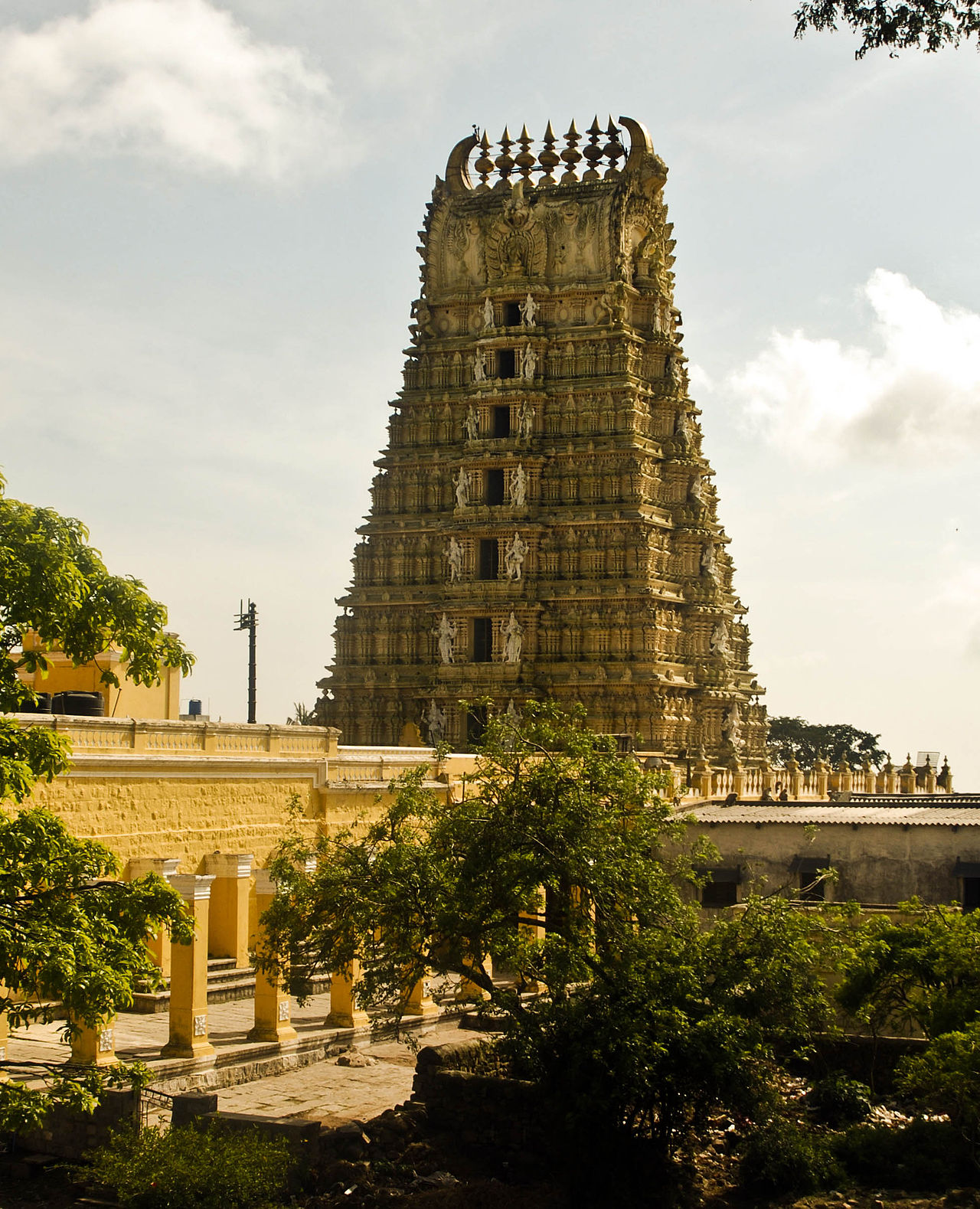
Chamundeshwari Temple with its 7-storey gilded Rajagopura atop Chamundi Hill, Mysuru
How to Reach
By Air18 km
Mysuru Airport (Mandakalli Airport) (MYQ)Mysuru Airport has limited connectivity — primarily flights to Bangalore (BLR) and some other cities. For major connectivity, use Kempegowda International Airport, Bangalore.
By Train16 km
Mysuru Junction (MYS)Mysuru Junction is the main station for Mysuru; well-connected to Bangalore (KSR) with multiple express trains, including Shatabdi Express (3 hours). From Mysuru station to Chamundi Hill: autorickshaw (₹150–250) or KSRTC bus Route 201 from city bus stand (1 km from station).
Tip: Best travel between October – MarchWeather can change quickly in the Himalayas. Carry proper clothing.
Location Map
Chamundeshwari Temple, Chamundi Hill, Mysuru, Karnataka
Accommodation
Stay options near Mysuru (Mysore)
Comfortable dharamshalas, hotel rooms, and ashram stays are available surrounding the temple zone. It is highly recommended to book stays at least 2–3 months in advance during peak season.
Nearby Places
Explore sacred places around Mysuru (Mysore)
🛕Local Market
1.2 km🛕Sacred Water Tank
0.5 km🛕Sunset Viewpoint
2.4 km🛕Divine Museum
3.1 km