Composing…
Sacred Yatra
Shri Amarnath Yatra
श्री अमरनाथ यात्रा
Jammu & Kashmir
LocationJammu & Kashmir
ॐ
DeityLord Shiva (Amarnath — self-manifested ice Shivalinga)
Darshan TimingsTiming updates in progress
EntryPaid entry
Before You Go
Practical temple planning
Plan darshan, source checks, and puja help without assuming unofficial bookings or guaranteed access.
Darshan planning
Verify same-day timings
Temple hours can change on festival days, aarti windows, and crowd-control days.
Check sourceOfficial source
Use official links first
Use the temple or trust website before paying for seva, rooms, helicopter tickets, or special darshan.
Open official siteTemple contact
Contact not confirmed
PujaKit does not claim official temple affiliation; use official/public temple channels where available.

Significance
Amarnath is one of the holiest shrines in Hinduism and the most significant Shiva pilgrimage in Northern India. The cave temple is considered one of the 51 Shakti Peeths (Parvati's throat/kantha is said to have fallen here, though this attribution is disputed across different traditions — the associated Shakti is Mahamaya, and the Bhairava is Trisandhyeshwar). The ice Shivalinga is unique — a svayambhu (self-manifested) natural formation — lending the site exceptional sanctity. Millions of devotees undertake this yatra annually, facing altitude, treacherous terrain, and unpredictable Himalayan weather. The act of undertaking the yatra itself is considered highly meritorious — believed to wash away sins and grant moksha. SASB manages the entire operation, ensuring safety and logistics for hundreds of thousands of pilgrims each season.
“
नमामीशमीशान निर्वाणरूपं विभुं व्यापकं ब्रह्म वेदस्वरूपम्।
— आदि शंकराचार्य
Pilgrim Context
Shri Amarnath Yatra is a Hindu sacred place in Anantnag, Jammu & Kashmir, connected with Lord Shiva (Amarnath — self-manifested ice Shivalinga). As a yatra profile, the page is best used for understanding the pilgrimage route, devotional intent, seasonality, and practical preparation before travel.
The central legend of Amarnath Yatra is rooted in the Shiva Purana: Lord Shiva chose this remote Himalayan cave to reveal the secret of immortality (Amar Katha / Amrit Katha) to Goddess Parvati. Before entering the cave, Shiva shed all his divine attendants and possessions at different spots (giving rise to nearby sacred sites): — He left his vehicle Nandi the bull at Pahalgam (originally Bail Gaon, "town of the bull"); hence Pahalgam is the starting point. — He shook off the moon from his matted locks at Chandanwari. — He left his serpents (nagas) at Sheshnag Lake. — He left his son Ganesha at Mahagunas Top. — At Panchtarni, he shed the five elements (Panch Tatvas). Entering the cave alone with Parvati, Shiva narrated the Amar Katha. However, two white doves (pigeons) who had been nesting in the cave accidentally overheard the story and attained immortality. These "Amar Pakshi" (immortal birds) are said to still appear near the cave, and devotees consider sighting white doves at Amarnath a highly auspicious sign.
Major observances connected with this profile include Shravan Purnima (Raksha Bandhan Darshan) (August (Shravan Purnima)), Yatra Opening Ceremony, Chhadi Mubarak Procession. During these periods, devotees should expect heavier crowds, longer queues, and a stronger emphasis on aarti, utsav, and local temple customs.
A useful visit plan begins with the darshan window, then works backward through route, footwear and bag rules, offering guidelines, queue options, and local transport from Jammu & Kashmir. For older shrines and high-crowd temples, early morning and non-festival weekdays usually give devotees more time for quiet prayer.
For devotional preparation, visitors can keep the practice simple: learn the main deity's name, carry only permitted offerings, observe modest dress, and close the visit with a short mantra, pradakshina, or dana where appropriate. This keeps temple travel connected to sadhana rather than only sightseeing.
Festival Focus
- Shravan Purnima (Raksha Bandhan Darshan) (August (Shravan Purnima))
- Yatra Opening Ceremony
- Chhadi Mubarak Procession
Darshan Notes
Confirm current darshan timings, entry rules, and seva availability before visiting.
Source-backed guide
Official sources first
Need help arranging a puja?
Share your city, preferred date, and ritual need. PujaKit will confirm availability, samagri, pricing, and terms before any booking is finalized.
Visit Essentials
Best Time to VisitMay – June & Sep – Oct
Altitude3,888 m (12,756 ft)
🛕
Temple Status / SeasonMay (Akshaya Tritiya) – Nov
Best ExperienceEarly morning for peaceful darshan
Architecture & Highlights
Highlights
Architectural highlights details updating.
Gallery

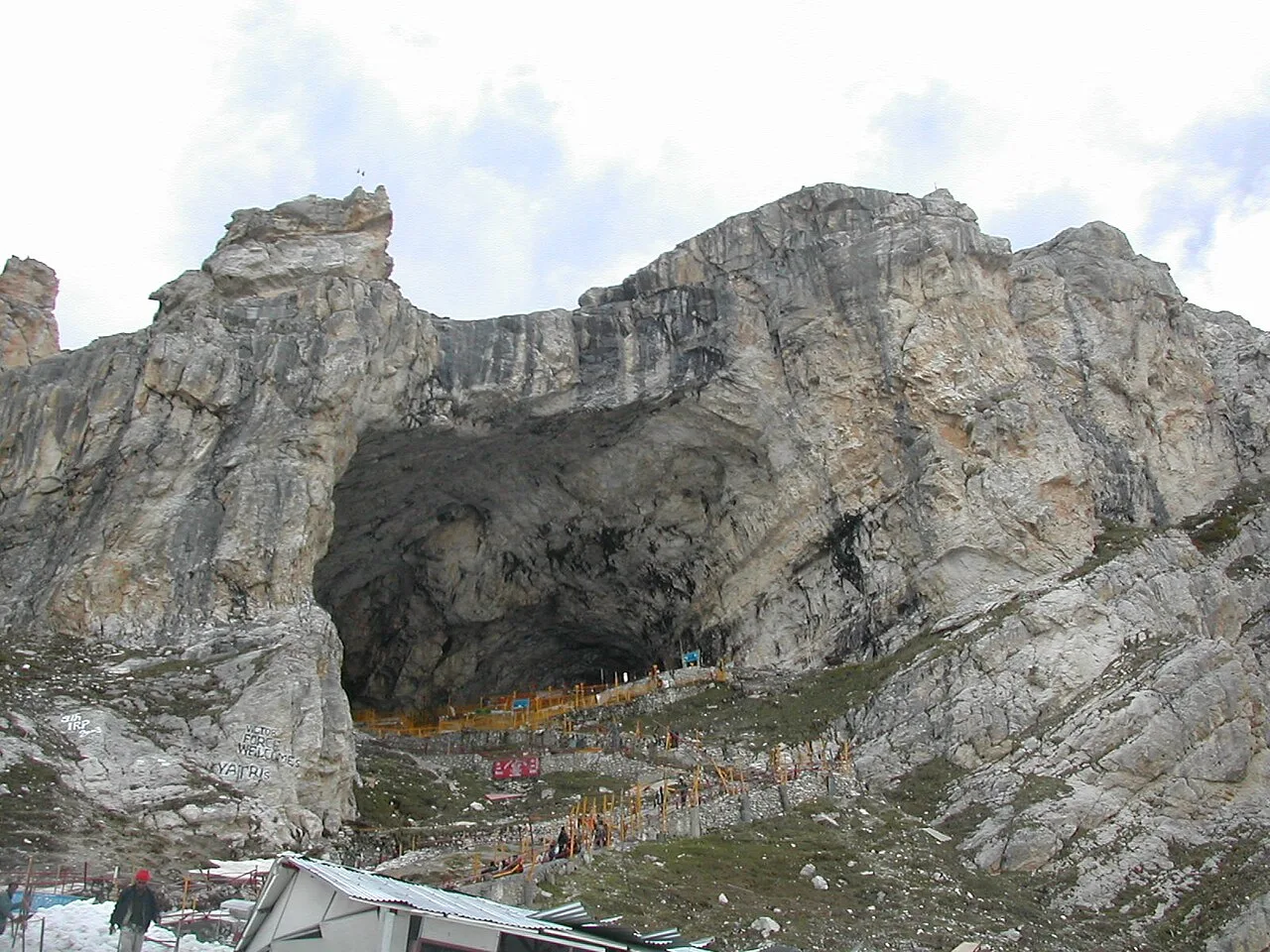
Amarnath Cave Temple entrance — the natural cave housing the ice Shivalinga
How to Reach
Tip: Best travel between May – June & Sep – OctWeather can change quickly in the Himalayas. Carry proper clothing.
Location Map
Shri Amarnath Yatra, Jammu & Kashmir Himalayas
Accommodation
Stay options near

Comfortable dharamshalas, hotel rooms, and ashram stays are available surrounding the temple zone. It is highly recommended to book stays at least 2–3 months in advance during peak season.
Nearby Places
Explore sacred places around
🛕Local Market
1.2 km🛕Sacred Water Tank
0.5 km🛕Sunset Viewpoint
2.4 km🛕Divine Museum
3.1 km