
Composing…
Itihāsa · Smriti · Vaishnava / Vedanta
Bhagavad Gita
भगवद्गीता
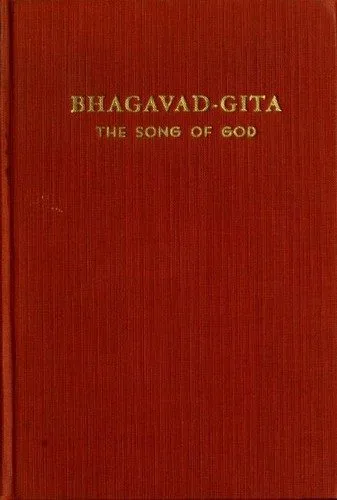
ItihāsaSmritiVaishnava / Vedanta
- Author
- Vyasa (traditional)
- Period
- c. 400 BCE – 200 CE
- Length
- 18 adhyayas · 700 shlokas
- Language
- Sanskrit, Hindi, English
dharmakarmayogamokshabhaktikrishnaarjuna
Where to Buy
Gita Press
Hindi₹120
ISKCON
English₹350
About This Book
About
The Bhagavad Gita ('Song of the Lord') is a 700-verse Sanskrit scripture embedded in the Mahabharata (Bhishma Parva, chapters 23–40). It records the dialogue between Prince Arjuna and his charioteer and friend Krishna on the Kurukshetra battlefield, moments before a devastating war between the Pandavas and Kauravas. Facing the moral crisis of fighting his own kinsmen, Arjuna lays down his bow; Krishna then imparts the philosophical and spiritual teaching that forms the Gita.
Significance
Regarded as the essence of the Upanishads and the Brahma Sutras, the Bhagavad Gita is the most widely read scripture of Sanatana Dharma. Every major Vedantic acharya — Shankaracharya, Ramanujacharya, Madhvacharya — wrote a commentary on it. The Gita synthesises the paths of karma (action), jnana (knowledge), and bhakti (devotion) into an integral vision of dharma and liberation. Mahatma Gandhi called it his 'eternal mother'; Swami Vivekananda, Sri Aurobindo, and B.G. Tilak each built transformative interpretations upon it.
Structure
Eighteen adhyayas (chapters), each named for a yoga: Ch. 1 Arjuna Vishada Yoga (47 shlokas) · Ch. 2 Sankhya Yoga (72) · Ch. 3 Karma Yoga (43) · Ch. 4 Jnana Karma Sanyasa Yoga (42) · Ch. 5 Karma Sanyasa Yoga (29) · Ch. 6 Atma Samyama Yoga (47) · Ch. 7 Jnana Vijnana Yoga (30) · Ch. 8 Akshara Brahma Yoga (28) · Ch. 9 Raja Vidya Raja Guhya Yoga (34) · Ch. 10 Vibhuti Yoga (42) · Ch. 11 Vishvarupa Darshana Yoga (55) · Ch. 12 Bhakti Yoga (20) · Ch. 13–18 conclude with philosophy of Purusha-Prakriti, gunas, shraddha, and renunciation.
Key Themes
- Nishkama Karma: Act without attachment to results — the cornerstone of the Gita's practical ethics.
- Svadharma: Each person must follow their own duty; abandoning it out of confusion is worse than doing it imperfectly.
- Bhakti: Loving surrender to Krishna as the supreme is presented as the highest path in Ch. 12 and 18.
- Jnana: Self-knowledge — the realisation that the Atman is indestructible, unborn, and eternal (Ch. 2).
- Moksha: Liberation is possible in this very life through integrated spiritual practice.
Key Passages
BG 2.47 — Karmanye vadhikaraste ma phaleshu kadachana…
'You have the right to perform your duty, but not to the fruits thereof. Let not the fruits of action be your motive, nor let your attachment be to inaction.'
BG 18.66 — Sarva-dharman parityajya mam ekam sharanam vraja…
'Abandon all varieties of dharma and simply surrender unto Me. I shall deliver you from all sinful reactions. Do not fear.'
Reading Guidance
Best starting point: Chapter 2 — the philosophical core that covers all major topics. Recommended commentaries: Adi Shankaracharya (Advaita), Ramanujacharya (Vishishtadvaita), Prabhupada / ISKCON (Gaudiya Vaishnava), Sri Aurobindo (Integral Yoga), and Swami Tapasyananda. Prerequisites: None — the Gita is accessible to all readers. A good translation with word-by-word meaning accelerates understanding.
Summary & Tradition Context
Bhagavad Gita is a smriti itihāsa text in the Vaishnava / Vedanta tradition. It is listed here with language, period, author attribution, editions, related texts, and tradition context.
The composition period is given as c. 400 BCE – 200 CE. The text length is listed as 18 adhyayas · 700 shlokas. The traditional or listed author is Vyasa (traditional).
Key Teachings & Themes
dharma
This theme helps place Bhagavad Gita within Hindu study, practice, commentary, and related texts.
karma
This theme helps place Bhagavad Gita within Hindu study, practice, commentary, and related texts.
yoga
This theme helps place Bhagavad Gita within Hindu study, practice, commentary, and related texts.
moksha
This theme helps place Bhagavad Gita within Hindu study, practice, commentary, and related texts.
bhakti
This theme helps place Bhagavad Gita within Hindu study, practice, commentary, and related texts.
References
- data/corpus/gita/bhagavad-gita.json
- https://github.com/gita/gita
- https://sacred-texts.com/hin/sbg/sbg00.htm