
Composing…
Shakti Peeth
Mahalakshmi Temple, Kolhapur (Ambabai)
महालक्ष्मी मंदिर, कोल्हापुर (अंबाबाई)
Kolhapur, Maharashtra
LocationMaharashtra
ॐ
DeityGoddess Mahalakshmi (Ambabai) — Sati's eyes fell here (per some traditions); fierce 4-armed warrior goddess — distinct from wealth-giving Lakshmi
Darshan Timings04:00 – 22:00
EntryFree entry
Before You Go
Practical temple planning
Plan darshan, source checks, and puja help without assuming unofficial bookings or guaranteed access.
Darshan planning
Timing notes available
Temple open 4 AM to 10 PM with a 2-hour midday break (12:30–2:30 PM). No weekly closure. Timings may extend during Navratri.
Check sourceOfficial source
Use official links first
Use the temple or trust website before paying for seva, rooms, helicopter tickets, or special darshan.
Open official siteTemple contact
Kolhapur Devi Darshan Trust / Shri Mahalakshmi Devasthan Trust
Listed contact: +91-231-2621240. Use it for current queue, entry, and seva questions.
Significance
Shri Mahalakshmi Temple, Kolhapur — known locally as "Ambabai" (the Mother) — is one of the most venerable Shakti Peethas in India and is counted among the six Maha Shakti Peethas, the most sacred subset of the 51 Shakti Peethas. Per Shakti Peeth traditions, Sati's eyes (or another body part per different texts) fell here. The goddess here is NOT the benevolent wealth-goddess Lakshmi of mainstream Vaishnavism — she is a fierce, warrior manifestation: 4-armed, holding a lion (her vehicle), the severed head of Mahishasura, a Veena (musical instrument), and a bowl (panpatra). She is Mahishasuramardini — the slayer of the buffalo-demon — in her full warrior glory. This is one of Maharashtra's most important pilgrimage destinations, drawing over 6 million pilgrims annually.
“
सर्वमङ्गलमाङ्गल्ये शिवे सर्वार्थसाधिके। शरण्ये त्र्यम्बके गौरि नारायणि नमोऽस्तु ते॥
— देवी माहात्म्य
Pilgrim Context
Mahalakshmi Temple, Kolhapur (Ambabai) is a Hindu sacred place in Kolhapur, Kolhapur, Maharashtra, connected with Goddess Mahalakshmi (Ambabai) — Sati's eyes fell here (per some traditions); fierce 4-armed warrior goddess — distinct from wealth-giving Lakshmi. As a Shakti Peeth, the shrine is approached through the living Shakta tradition of Devi worship, local goddess identity, Bhairava association, and festival-centered pilgrimage.
The Mahalakshmi Temple at Kolhapur traces its origins to approximately the 7th–8th century CE. The Kolhapur region was under the influence of the Chalukya dynasty during this period, and the original structure reflects Hemadpanthi and early Chalukyan architectural traditions. — 7th–8th century CE: Original temple structure established — Shilaharas (9th–12th century CE): The Shilahara dynasty, a feudatory of the Rashtrakutas and later the Chalukyas, ruled Kolhapur and extended patronage to the temple, adding to its structure — Yadavas (12th–14th century CE): Further extensions and maintenance — Chhatrapati Shivaji Maharaj (17th century CE): Shivaji was a devoted worshipper of Maa Bhavani (a manifestation of Shakti); while the famous sword episode is linked to Tuljapur, Kolhapur's Ambabai was also venerated by the Bhosale clan — Kolhapur Princely State: The later Maratha rulers of Kolhapur maintained and extended the temple; the surrounding complex was developed over centuries — Modern era: Managed by the Kolhapur Devi Darshan Trust under Maharashtra government oversight
Major observances connected with this profile include Navratri, Kiranotsava (Kiran Utsav), Chaitra Navratri, Gudi Padwa. During these periods, devotees should expect heavier crowds, longer queues, and a stronger emphasis on aarti, utsav, and local temple customs.
A useful visit plan begins with the darshan window, then works backward through route, footwear and bag rules, offering guidelines, queue options, and local transport from Kolhapur. For older shrines and high-crowd temples, early morning and non-festival weekdays usually give devotees more time for quiet prayer.
For devotional preparation, visitors can keep the practice simple: learn the main deity's name, carry only permitted offerings, observe modest dress, and close the visit with a short mantra, pradakshina, or dana where appropriate. This keeps temple travel connected to sadhana rather than only sightseeing.
Festival Focus
- Navratri
- Kiranotsava (Kiran Utsav)
- Chaitra Navratri
- Gudi Padwa
Darshan Notes
- Kakad Aarti (Pratah / Dawn Aarti) at 04:00
- Panchamrit Abhishek / Puja at 05:30–06:30
- Mahanaivedya (Naivedya Puja) at ~11:00
- Temple open 4 AM to 10 PM with a 2-hour midday break (12:30–2:30 PM). No weekly closure. Timings may extend during Navratri.
Source-backed guide
Need help arranging a puja?
Share your city, preferred date, and ritual need. PujaKit will confirm availability, samagri, pricing, and terms before any booking is finalized.
Visit Essentials
Best Time to VisitOctober – March
AltitudeNear Sea Level
🛕
Temple Status / SeasonOpen Year-round
Best ExperienceEvening Aarti & lighting
Architecture & Highlights
StyleHemadpanthi style (also spelled Hemadpanthi / Hemadpanthi)
Highlights
- ·Black Ganda-stone (Gandhashar pashaan) construction — no mortar; dry-lock interlocking stone technique
- ·No gopuram (large gateway tower) — unlike South Indian temples; the temple has a simple but powerful Hemadpanthi shikha
- ·Kiranotsava window — the precise western window through which the sun's rays illuminate the idol 3 times/year; one of the most extraordinary astronomical alignments in Indian temple architecture
- ·Garuda Mandapam (Garuda Mandap) — the prayer hall in front of the main sanctum; named after Garuda (Vishnu's mount); used for darshan and aarti
Gallery
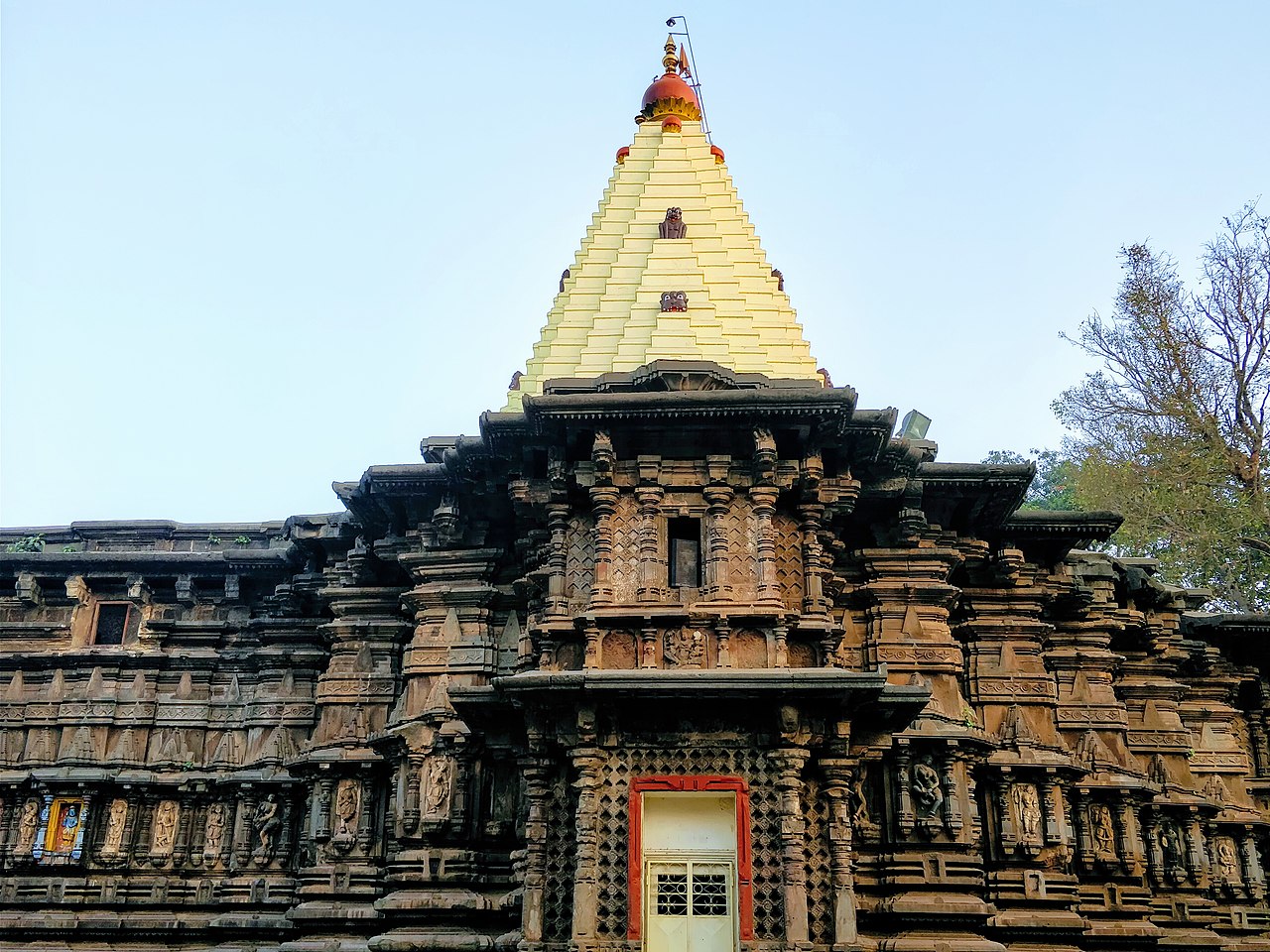
Shri Mahalakshmi Temple (Ambabai) exterior, Kolhapur — Hemadpanthi black stone architecture
How to Reach
By Air8 km
Kolhapur Airport (Chhatrapati Rajaram Maharaj Airport) (KLH)Limited connectivity (flights to/from Mumbai operated by IndiGo and SpiceJet; check current schedule). Taxi from airport to temple: 15–20 minutes.
By Train3 km
Kolhapur Railway Station (KOP)Kolhapur is well-connected on the Miraj–Kolhapur railway line. Trains from Pune, Mumbai (via Miraj), and other major Maharashtra cities. From station: auto-rickshaw or taxi to temple (10 minutes, ₹50–100).
By Road~242 km
Kolhapur is well-connected by road: — Pune: 228 km via NH-48 (4–4.5h) — Mumbai: 374 km via NH-48 (6–7h) — Belgaum (Belagavi, Karnataka): 100 km (2h) — cross-border pilgrimage — Sangli: 50 km (1h) — Satara: 110 km (2h) Maharashtra State Road Transport Corporation (MSRTC) runs frequent buses from Pune, Mumbai, Sangli, Satara, and other cities to Kolhapur. Private taxis and cabs also available.
Tip: Best travel between October – MarchWeather can change quickly in the Himalayas. Carry proper clothing.
Location Map
Mahalakshmi Temple, Kolhapur (Ambabai), Maharashtra
Accommodation
Stay options near Kolhapur

Comfortable dharamshalas, hotel rooms, and ashram stays are available surrounding the temple zone. It is highly recommended to book stays at least 2–3 months in advance during peak season.
Nearby Places
Explore sacred places around Kolhapur
🛕Local Market
1.2 km🛕Sacred Water Tank
0.5 km🛕Sunset Viewpoint
2.4 km🛕Divine Museum
3.1 km