
- Published
- Published 24 May 2026
- Reviewed
- Reviewed 31 May 2026
- Reading time
- 4 min read
- Sources
- 3 sources
Index
- Quick Answer
- Why Devotees Visit
- Planning Your Darshan
- Useful Links
- Check Before Travel
- Suggested Use
- A Practical One-Day Framework
- Samagri And Service Intent
- Before You Finalize The Trip
- FAQ
- Is Mathura-Vrindavan suitable for a one-day trip?
- Should I trust exact timings from this guide?
- How should I use Panchang for a city visit?
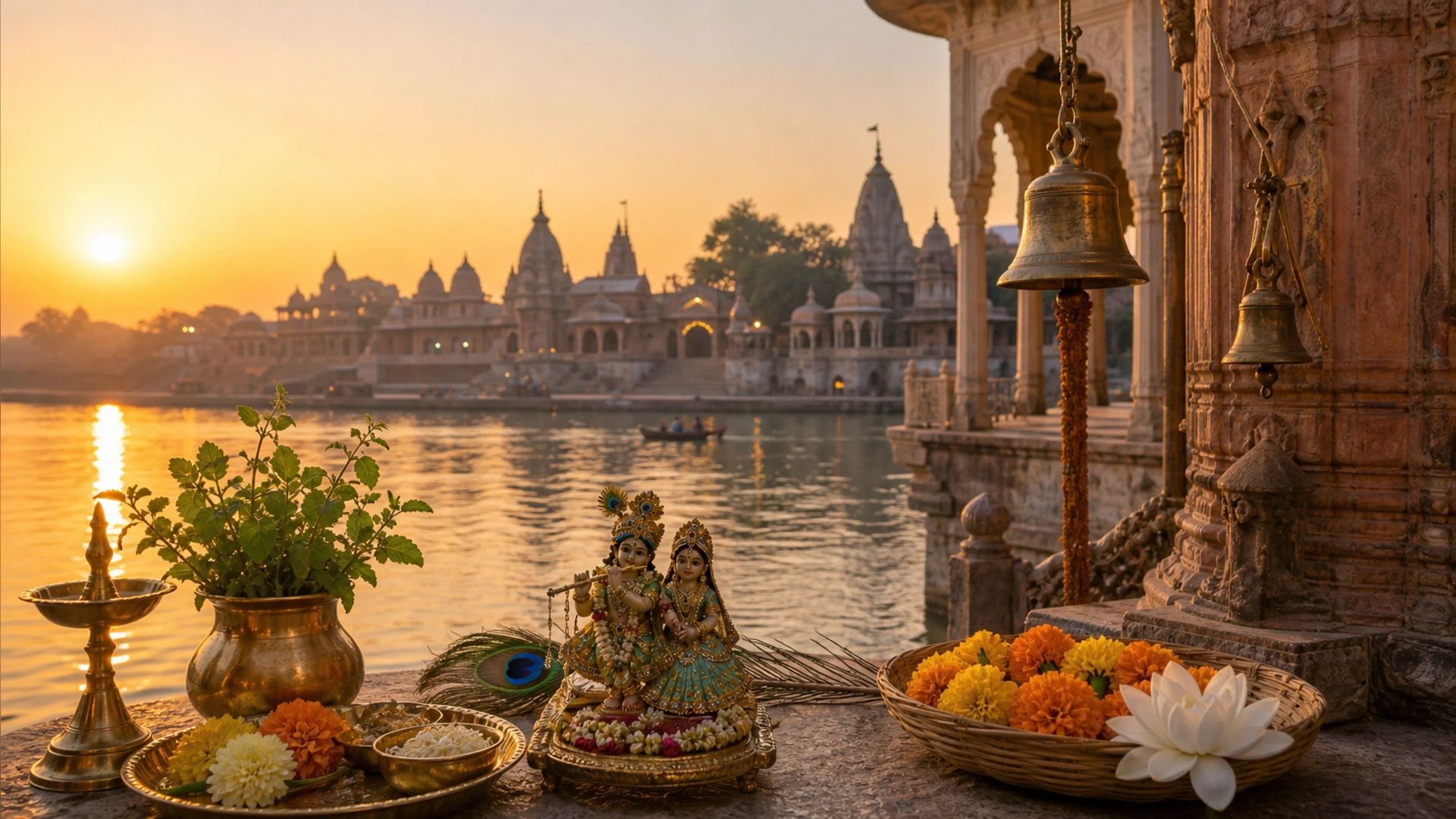
A Mathura-Vrindavan spiritual guide should help devotees plan darshan with clarity, not promise live timings or route certainty. This guide connects the city’s Hindu temple cluster, festivals, local devotional mood, Panchang planning, and safe service intent.
Quick Answer
Mathura-Vrindavan is a Krishna bhakti region best planned around darshan, kirtan, Yamuna context, Janmashtami, Holi, and Govardhan links.
Use this guide to decide what kind of trip you are making: one-day darshan, festival visit, family pilgrimage, vrat-linked visit, or a slower spiritual stay. Then confirm current timings, queues, passes, route changes, and local advisories from official temple, trust, district, or tourism sources before travel.
Why Devotees Visit
The region is not one stop. It is a living Braj landscape of Krishna temples, lila places, kirtan, parikrama, festivals, and household bhakti.
A good city guide should not simply list places. It should help a devotee understand the spiritual center of gravity: which deity traditions are strongest, which festivals change the city rhythm, what kind of puja support is common, and where Panchang timing matters.
Planning Your Darshan
- Primary focus: choose Krishna Janmabhoomi, Vrindavan temples, or Govardhan instead of rushing all
- Festival caution: Holi and Janmashtami are intense and need careful family planning
- Practice focus: kirtan, nama-japa, and simple darshan often matter more than checklist tourism
Useful Links
Check Before Travel
Temple cities change during major festivals, school holidays, eclipses, monsoon conditions, yatra windows, and local administration controls. Do not rely on an old blog post for exact opening hours, queue rules, VIP entry, route closures, or booking links. PujaKit keeps this guide devotional and practical, while treating live travel details as freshness-sensitive.
Suggested Use
Before leaving, choose a primary temple or deity focus, one backup temple, one quiet time for prayer, and one local food/rest break. Keep the trip realistic for elders and children. If you need a puja kit, pandit coordination, or samagri, connect it to the actual ritual you plan to perform rather than carrying excess items.
A Practical One-Day Framework
For a one-day visit, keep the route deliberately small. Choose the main temple first, then add one nearby sacred place only if time and energy allow. Keep phone screenshots of official booking or source pages, carry water, check footwear and bag rules, and avoid planning a strict vrat completion around uncertain travel movement unless the timing has been checked locally.
Families with elders or children should plan around rest more than ambition. A city can have ten famous temples, but a tired family will not absorb the darshan well. It is better to take one meaningful darshan, sit quietly, and return with gratitude than to rush through a list.
For a two-day visit, keep day one for the primary darshan and day two for nearby temples, ghats, parikrama, shopping for simple puja items, or a slower family prayer. Avoid filling both days with early morning and late night commitments unless everyone is prepared. Devotional travel becomes more useful when there is enough silence to absorb what was seen.
Samagri And Service Intent
Carry only what is appropriate for the temple. Many temples restrict outside offerings or have specific counters. For home puja before or after travel, prepare simple samagri through Puja kits, Aarti guidance, and Daily Panchang. For priest-led rituals, confirm what the priest expects instead of assuming every kit is allowed everywhere.
Before You Finalize The Trip
Check three things again close to the visit: the official source for the main temple, the local Panchang or festival calendar, and the physical needs of the people travelling with you. This final check prevents most avoidable problems. It also keeps the guide honest: PujaKit can help organize devotional intent, but live access, queues, weather, and administration rules belong to current local sources.
FAQ
Is Mathura-Vrindavan suitable for a one-day trip?
Only for a narrow plan. A meaningful Braj visit usually needs more time and fewer stops.
Should I trust exact timings from this guide?
No. This guide avoids live timing promises. Always check the current official temple, trust, district, or tourism source before final travel decisions.
How should I use Panchang for a city visit?
Use Panchang to understand tithi, festival context, rahu kalam, sunrise/sunset, and vrat timing, then match it with practical temple access.