
- Published
- Published 24 May 2026
- Reviewed
- Reviewed 31 May 2026
- Reading time
- 4 min read
- Sources
- 5 sources
Navratri Vrat is a Hindu vrat observed with devotion, restraint, prayer, and local Panchang awareness. This guide explains the meaning, practical preparation, safe timing caveats, and the way a family can keep the vrat without turning a living tradition into a rigid one-size-fits-all rule.
Quick Answer
Navratri Vrat is a nine-night Devi observance. It may include fasting, Durga or Lakshmi-Saraswati worship, garba, katha, japa, and regional family customs.
Use this page as a practical devotional guide: understand the sankalpa, check the tithi or moonrise where needed, prepare only the samagri your household tradition uses, and keep health, age, pregnancy, medication, travel, and work conditions in view. PujaKit can help with Daily Panchang, the Moonrise Panchang helper, and related puja items, but strict vrata rules should still be confirmed with a family elder, priest, or trusted local Panchang.
Meaning And Devotional Focus
Navratri is not only about food rules. It is a disciplined return to Shakti: courage, clarity, protection, learning, prosperity, and devotion to the Divine Mother.
The most useful way to approach the vrat is to ask: what quality is this observance cultivating? For some devotees it is steadiness, for others gratitude, discipline, remembrance, forgiveness, or protection. The external details matter, but the inner movement matters too. If a person simply copies a checklist without understanding the intent, the vrat becomes stressful. If the person understands the intent, even a simple home observance can feel sincere.
Practical Preparation
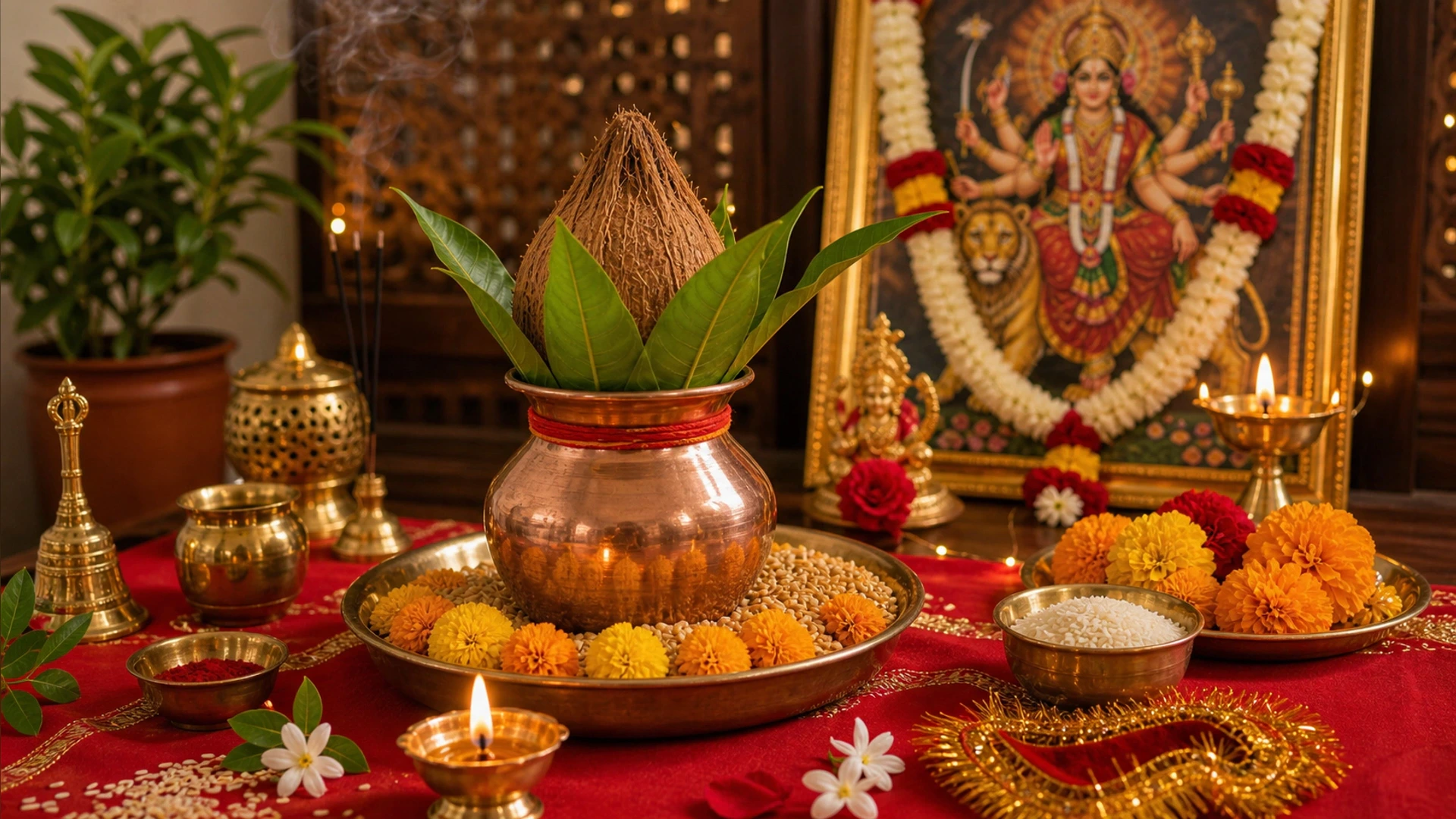
Start one day earlier if possible. Check the date in the Panchang, note any moonrise or pradosh-kala dependency, and decide whether the observance is full, partial, fruit-based, or symbolic according to health and family practice. Keep the altar clean, arrange a diya, flowers, water, akshat, kumkum or chandan where appropriate, and the deity-specific offerings used in your home.
For a simple home version, keep the sequence calm:
- Clean the puja space and sit with a steady sankalpa.
- Light a diya and offer a short prayer to Ganesha first.
- Invoke Durga, Lakshmi, Saraswati, or the family Devi tradition with the mantra, stotra, or nama-japa known in your family.
- Offer water, flowers, fragrance, naivedya, and aarti according to your tradition.
- Read or listen to the vrat katha only if it is part of your sampradaya or household practice.
- Complete the vrat according to the tithi, moonrise, sunset, or family rule that applies.
Timing And Safety Caveats
Navratri follows a regional Panchang calendar. Ghatasthapana, Ashtami, Navami, Kanya Puja, and visarjan customs should be checked locally.
Do not treat social media timing cards as final for strict observance. A city-level time can still differ from a village, suburb, or diaspora location. When the vrata completion depends on moonrise, use /panchang/moonrise as a helper and then confirm locally. When the vrata depends on pradosh-kala, purnima, amavasya, or a festival night, read the local Panchang note before fasting strictly.
Useful Internal Links
- Durga Puja festival guide
- Navratri kit guide
- 51 Shakti Peeth list
- Daily Panchang
- Durga Puja Kit
- Navratri Kit
Common Mistakes To Avoid
- Do not turn health-sensitive fasting into pressure or comparison.
- Do not promise one universal parana or completion time for all cities.
- Do not buy excessive samagri when a simple, sincere puja is enough.
- Do not mix regional rules without knowing why your family follows a specific sequence.
- Do not treat an answer page as a substitute for a local priest when a sankalpa is strict or complex.
After The Vrat
After the vrat, keep the completion gentle. Offer gratitude, distribute prasad respectfully, and note what worked for your family so the next observance is calmer. If the fast was difficult, do not turn that into guilt. Many households keep a devotional adjustment: fruit, milk, simple sattvic food, or partial fasting with mantra and puja. That is better than copying a severe rule and then feeling anxious or unwell.
If the vrat is connected with a monthly rhythm, save the next likely date in your calendar and recheck it with Panchang closer to the time. If the vrat is connected with a major festival, prepare samagri a few days early but leave fresh items for the day itself. This is the practical middle path: devotion remains steady, and the home does not become rushed.
FAQ
Can everyone keep Navratri Vrat?
Not always in the same way. Children, elders, pregnant devotees, people on medication, and anyone with health concerns should adapt the fast with family and medical common sense. Devotion should not become harm.
Do I need every item listed online?
No. Keep the items your tradition actually uses. A clean diya, water, flowers, akshat, and sincere prayer are often more useful than a crowded altar.
Can PujaKit give the final vrat time?
PujaKit can calculate and organize Panchang helpers, but the final strict timing should be checked with your local Panchang or trusted priest, especially for moonrise-sensitive vrats.