Composing…
State Temple
Kamadgiri Parvat (Kamadgiri Hill), Chitrakoot
कामदगिरि पर्वत, चित्रकूट
Chitrakoot, Uttar Pradesh + Madhya Pradesh (The Chitrakoot Region Spans Both States)
LocationUttar Pradesh + Madhya Pradesh (The Chitrakoot Region Spans Both States)
ॐ
DeityBhagwan Ram (Vanvasi/forest-dwelling form during exile)
Darshan TimingsTiming updates in progress
EntryFree entry
Before You Go
Practical temple planning
Plan darshan, source checks, and puja help without assuming unofficial bookings or guaranteed access.
Darshan planning
Verify same-day timings
Temple hours can change on festival days, aarti windows, and crowd-control days.
Check sourceOfficial source
Source review needed
This profile uses available directory data; confirm booking and seva details locally before travel.
Temple contact
Multiple trusts; principal: Shri Kamadgiri Mukhar Bind Trust
PujaKit does not claim official temple affiliation; use official/public temple channels where available.

Significance
Kamadgiri is theologically significant as the **embodied form of Ram** himself — the entire hill is considered Ram's body in geographic form (svarup-darshan). Pilgrims do not enter the hill; they circumambulate it. The five-km parikrama is therefore a circumambulation of Ram's own form. Key spiritual practices: 1. **Parikrama**: 5 km clockwise circumambulation 2. **Barefoot**: Walking barefoot on the dust of Chitrakoot is traditional; the dust is considered sacred (charanaraj of Ram) 3. **Mandakini Snaan**: Sacred bath in the Mandakini River before parikrama 4. **Multiple Darshan**: 24+ shrines on the parikrama route 5. **Specific Tithi**: Amavasya (new moon), Somvati Amavasya, and the Hindu month of Magha are particularly auspicious
“
मङ्गलम् भगवान विष्णुः मङ्गलम् गरुडध्वजः। मङ्गलम् पुण्डरीकाक्षो मङ्गलाय तनो हरिः॥
— मङ्गल मन्त्र
Pilgrim Context
Kamadgiri Parvat (Kamadgiri Hill), Chitrakoot is a Hindu sacred place in Chitrakoot, Chitrakoot (UP) / Satna (MP) — straddles UP–MP border, Uttar Pradesh + Madhya Pradesh (The Chitrakoot Region Spans Both States), connected with Bhagwan Ram (Vanvasi/forest-dwelling form during exile). The temple belongs to the Vaishnava stream of worship, where darshan, nama-smarana, Tulasi offering, festival seva, and scriptural remembrance often guide the visit.
**Ramayana Period (~7,000 years ago, traditional dating):** Ram's 14-year exile (Vanvas) included an 11.5-year stay at Chitrakoot. The Ramayana describes the family's residence near Sage Atri and Anasuya's ashram, the visits of various sages (Valmiki, Bharadwaja), and the Bharat Milap. Ram and Sita's daily routines are described extensively in Ramcharitmanas and Valmiki Ramayana. **Tulsidas (16th c. CE):** Goswami Tulsidas, author of Ramcharitmanas (1574 CE), spent significant time at Chitrakoot. He had a famous darshan of Ram and Lakshman in forest form here, recorded in his Vinaya Patrika and Kavitavali. His direct devotional attachment to Chitrakoot revived its pilgrimage significance in the medieval Hindi-belt. **Modern Era:** Chitrakoot is administered as a major pilgrimage town by the UP and MP governments cooperatively. The Chitrakoot Dham Pradhikaran (Authority) coordinates infrastructure across the UP-MP border. The town has multiple ashrams, dharamshalas, and Ram-related religious institutions. Significant development of the Mandakini ghats and Kamadgiri parikrama path in the 2010s and 2020s.
Major observances connected with this profile include Amavasya (New Moon, every month), Diwali (October–November), Ram Navami (March–April), Vivah Panchami (November–December (Margashirsha Shukla Panchami)). During these periods, devotees should expect heavier crowds, longer queues, and a stronger emphasis on aarti, utsav, and local temple customs.
A useful visit plan begins with the darshan window, then works backward through route, footwear and bag rules, offering guidelines, queue options, and local transport from Chitrakoot. For older shrines and high-crowd temples, early morning and non-festival weekdays usually give devotees more time for quiet prayer.
For devotional preparation, visitors can keep the practice simple: learn the main deity's name, carry only permitted offerings, observe modest dress, and close the visit with a short mantra, pradakshina, or dana where appropriate. This keeps temple travel connected to sadhana rather than only sightseeing.
Festival Focus
- Amavasya (New Moon, every month)
- Diwali (October–November)
- Ram Navami (March–April)
- Vivah Panchami (November–December (Margashirsha Shukla Panchami))
Darshan Notes
Confirm current darshan timings, entry rules, and seva availability before visiting.
Source-backed guide
Official sources first
Need help arranging a puja?
Share your city, preferred date, and ritual need. PujaKit will confirm availability, samagri, pricing, and terms before any booking is finalized.
Visit Essentials
Best Time to VisitOctober – March
Altitude290 m (951 ft)
🛕
Temple Status / SeasonOpen Year-round
Best ExperienceEvening Aarti & lighting
Architecture & Highlights
Highlights
- ·5 km Parikrama Circuit: Clockwise circumambulation, paved with concrete now (historically dirt), well-marked, lined with smaller shrines.
- ·Mukhar Bind: The 'face' shrine — primary darshan starting/ending point of the parikrama. Houses Ram-Sita-Lakshman murtis.
- ·Bharat Milap Sthal: Identified spot of Bharat Milap; a small open shrine on the parikrama route.
- ·Hanuman Dhara: Sacred stream emerging from Kamadgiri's upper slopes; tradition holds Ram requested Hanuman to fashion a perpetual cooling stream for him on the hot hill — Hanuman shot an arrow and the stream emerged. Located on the parikrama path.
Gallery

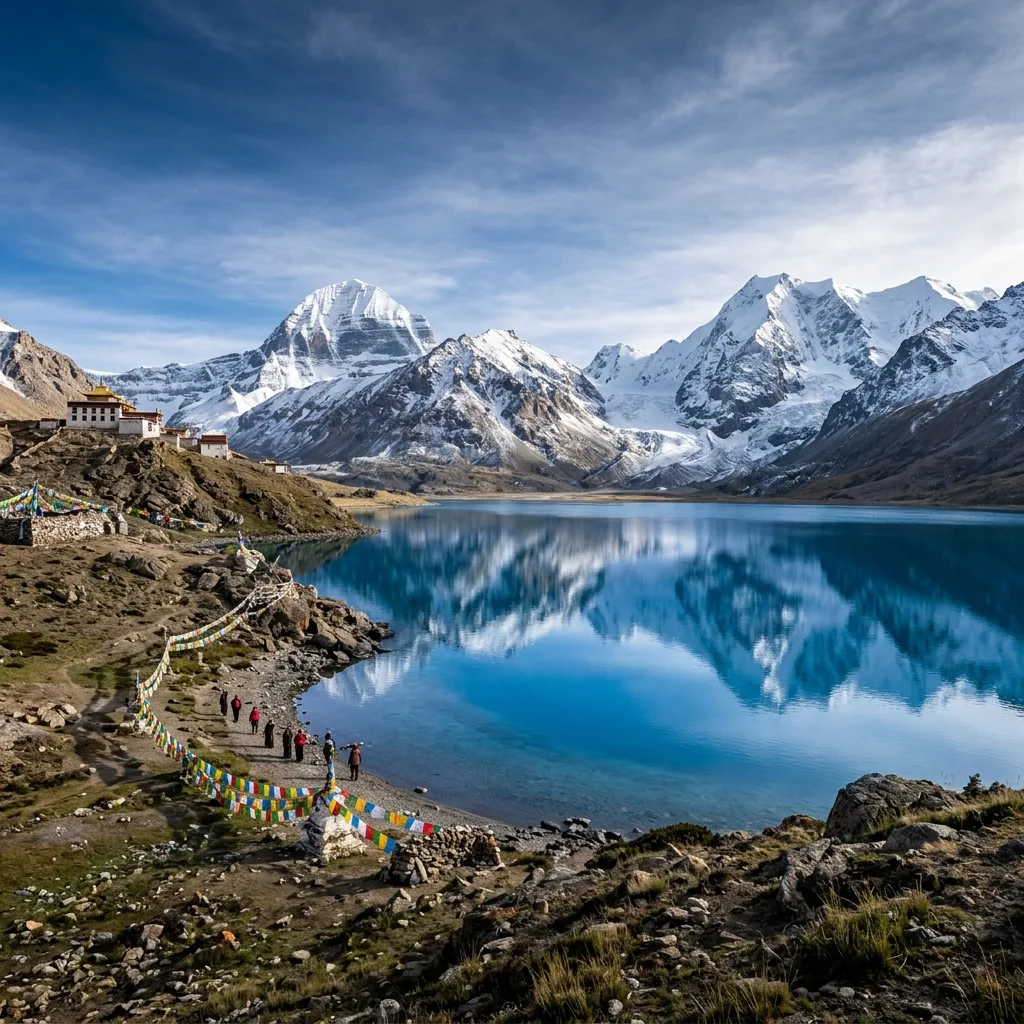
Kamadgiri Hill, Chitrakoot — Mukhar Bind side
How to Reach
By Air km
()
By Train8 km
Chitrakoot Dham KarwiOn the Manikpur-Chopan branch line (North Central Railway). Limited direct trains; many pilgrims arrive via Allahabad/Manikpur junction (45 km).
Tip: Best travel between October – MarchWeather can change quickly in the Himalayas. Carry proper clothing.
Location Map
Kamadgiri Parvat (Kamadgiri Hill), Chitrakoot, Uttar Pradesh + Madhya Pradesh (The Chitrakoot Region Spans Both States)
Accommodation
Stay options near Chitrakoot
Comfortable dharamshalas, hotel rooms, and ashram stays are available surrounding the temple zone. It is highly recommended to book stays at least 2–3 months in advance during peak season.
Nearby Places
Explore sacred places around Chitrakoot
🛕Local Market
1.2 km🛕Sacred Water Tank
0.5 km🛕Sunset Viewpoint
2.4 km🛕Divine Museum
3.1 km