Composing…
Shakti Peeth
Hinglaj Mata Temple
हिंगलाज माता मंदिर
Hinglaj, Balochistan
LocationBalochistan
ॐ
DeityMaa Hinglaj (Nani Mata) — Sati's head (brahmarandhra/crown) fell here; considered the most powerful of all 51 Shakti Peeths
Darshan TimingsTiming updates in progress
EntryFree entry
Before You Go
Practical temple planning
Plan darshan, source checks, and puja help without assuming unofficial bookings or guaranteed access.
Darshan planning
Timing notes available
The Hinglaj temple is open year-round but the principal time to visit is the annual Hinglaj Yatra (April, Chaitra Navratri) when facilities are maximally operational. Outside festival season, the temple is accessible but facilities are minimal. The cave-temple is a natural cave; darshan requires walking/trekking to the cave entrance. No formal "opening hours" — the cave is continuously accessible to those who can reach it. Pakistani Army personnel provide security and assistance during the Yatra.
Check sourceOfficial source
Source review needed
This profile uses available directory data; confirm booking and seva details locally before travel.
Temple contact
Local Hindu community / Pakistan government (during Yatra)
PujaKit does not claim official temple affiliation; use official/public temple channels where available.

Significance
Hinglaj Mata Temple is, according to the most significant traditions within Shakti Peeth theology, the supreme Shakti Peeth — the most powerful of all 51 Peethas. This supreme status derives from the body part that fell here: Sati's head (brahmarandhra — the crown chakra, the seat of divine consciousness). In yogic and Tantric understanding, the head/ crown chakra (Sahasrara) is the highest seat of spiritual energy in the human body. Where the head/crown of the divine mother fell, the most concentrated form of Shakti resides. Hinglaj is referred to in ancient texts as both a Shakti Peeth and as a site of immense antiquity — predating many formal temple traditions. The cave temple in Balochistan lies at the intersection of the Vedic Saraswati River civilization's western reach and the Indus Valley cultures. The goddess here is also known as "Nani" (maternal grandmother) by local Shakti devotees across the region, reflecting the enduring sacred memory of this remote site. Pakistan's largest pilgrimage — the Hinglaj Yatra — brings together Hindu pilgrims from across Pakistan (and historically from India). The Pakistani government and military actively facilitate the Yatra, providing security, medical assistance, and logistical support — a remarkable example of the state supporting a Hindu pilgrimage tradition.
“
सर्वमङ्गलमाङ्गल्ये शिवे सर्वार्थसाधिके। शरण्ये त्र्यम्बके गौरि नारायणि नमोऽस्तु ते॥
— देवी माहात्म्य
Pilgrim Context
Hinglaj Mata Temple is a Hindu sacred place in Hinglaj, Lasbela, Balochistan, connected with Maa Hinglaj (Nani Mata) — Sati's head (brahmarandhra/crown) fell here; considered the most powerful of all 51 Shakti Peeths. As a Shakti Peeth, the shrine is approached through the living Shakta tradition of Devi worship, local goddess identity, Bhairava association, and festival-centered pilgrimage.
Hinglaj's religious significance is ancient. The site is mentioned in the Mahabharata and several Puranas, establishing its antiquity as a place of goddess worship well before the formal Shakti Peeth framework was systematized in medieval texts. The Hindu pilgrimage traditions of Sindh and Balochistan — the regions of pre-Partition India that are now Pakistan — were centred significantly on Hinglaj. The Sindhi Hindu communities maintained this pilgrimage across centuries. After Partition (1947), most Sindhi Hindus migrated to India, but the remaining Pakistani Hindu community (especially in Sindh and Balochistan) continued the Yatra. The Pakistani government's support for the Hinglaj Yatra is noted as an example of Pakistan's stated commitment to protecting its Hindu religious minority's sacred sites. The Pakistani Army's logistical assistance for the Yatra — providing security across the remote Makran terrain — has been a consistent feature of the annual event. Historically, Indian pilgrims attended the Yatra before Partition (the goddess drew pilgrims from across undivided India and beyond). In the post-Partition period, limited Indian participation occurred. Currently, Indian access is effectively blocked by India-Pakistan relations.
Major observances connected with this profile include Hinglaj Yatra (Annual Pilgrimage), Navratri (Year-round). During these periods, devotees should expect heavier crowds, longer queues, and a stronger emphasis on aarti, utsav, and local temple customs.
A useful visit plan begins with the darshan window, then works backward through route, footwear and bag rules, offering guidelines, queue options, and local transport from Hinglaj. For older shrines and high-crowd temples, early morning and non-festival weekdays usually give devotees more time for quiet prayer.
For devotional preparation, visitors can keep the practice simple: learn the main deity's name, carry only permitted offerings, observe modest dress, and close the visit with a short mantra, pradakshina, or dana where appropriate. This keeps temple travel connected to sadhana rather than only sightseeing.
Festival Focus
- Hinglaj Yatra (Annual Pilgrimage)
- Navratri (Year-round)
Darshan Notes
- The Hinglaj temple is open year-round but the principal time to visit is the annual Hinglaj Yatra (April, Chaitra Navratri) when facilities are maximally operational. Outside festival season, the temple is accessible but facilities are minimal. The cave-temple is a natural cave; darshan requires walking/trekking to the cave entrance. No formal "opening hours" — the cave is continuously accessible to those who can reach it. Pakistani Army personnel provide security and assistance during the Yatra.
- Check current special puja booking rules before planning paid seva.
Source-backed guide
Official sources first
Need help arranging a puja?
Share your city, preferred date, and ritual need. PujaKit will confirm availability, samagri, pricing, and terms before any booking is finalized.
Visit Essentials
Best Time to VisitOctober – March
AltitudeNear Sea Level
🛕
Temple Status / SeasonOpen Year-round
Best ExperienceEvening Aarti & lighting
Architecture & Highlights
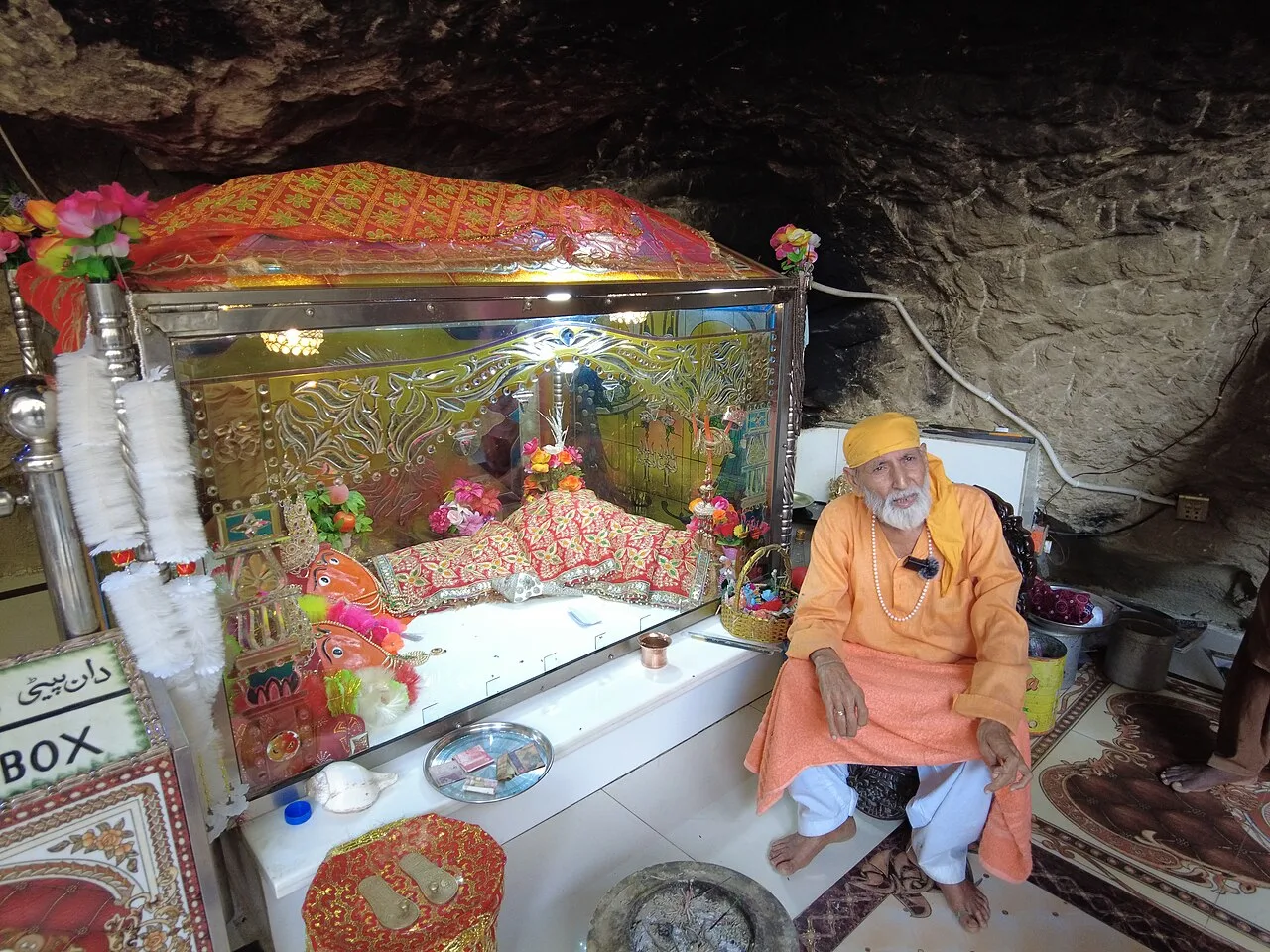
StyleNatural cave temple — no constructed building; cave in limestone/sandstone cliff in the Hingol River gorge
Highlights
- ·Natural cave forming the sanctum — the goddess is present in the unmodified rock; no idol in the conventional sense
- ·Cave entrance requires stooping/crawling to access inner chamber — a physical act of humility before the goddess
- ·Sacred lamp and flowers mark the site of divine presence within the cave
- ·Chandrakup mud volcanoes — sacred geological features; grey-white bubbling mud; considered the goddess's breath
Gallery

Hinglaj Mata cave temple in the Hingol River gorge, Balochistan, Pakistan
How to Reach
Tip: Best travel between October – MarchWeather can change quickly in the Himalayas. Carry proper clothing.
Location Map
Hinglaj Mata Temple, Balochistan
Accommodation
Stay options near Hinglaj
Comfortable dharamshalas, hotel rooms, and ashram stays are available surrounding the temple zone. It is highly recommended to book stays at least 2–3 months in advance during peak season.
Nearby Places
Explore sacred places around Hinglaj
🛕Local Market
1.2 km🛕Sacred Water Tank
0.5 km🛕Sunset Viewpoint
2.4 km🛕Divine Museum
3.1 km