
- Published
- Published 24 May 2026
- Reviewed
- Reviewed 31 May 2026
- Reading time
- 4 min read
- Sources
- 3 sources
Index
- Quick Answer
- Meaning In Daily Practice
- How A Devotee Can Use This Idea
- Related Practices And Pages
- Helpful Caveats
- What This Does Not Mean
- A Beginner-Friendly Practice
- For New Readers
- A Simple Reflection
- FAQ
- Is Darshan only a philosophical idea?
- Do all Hindu traditions explain it identically?
- Where should I go next?
Darshan is one of the everyday words of Sanatana Dharma that becomes clearer when it is connected to practice. This answer explains the meaning in simple language, where the idea appears in lived Hindu life, and how a devotee can apply it without turning a deep concept into a slogan.
Quick Answer
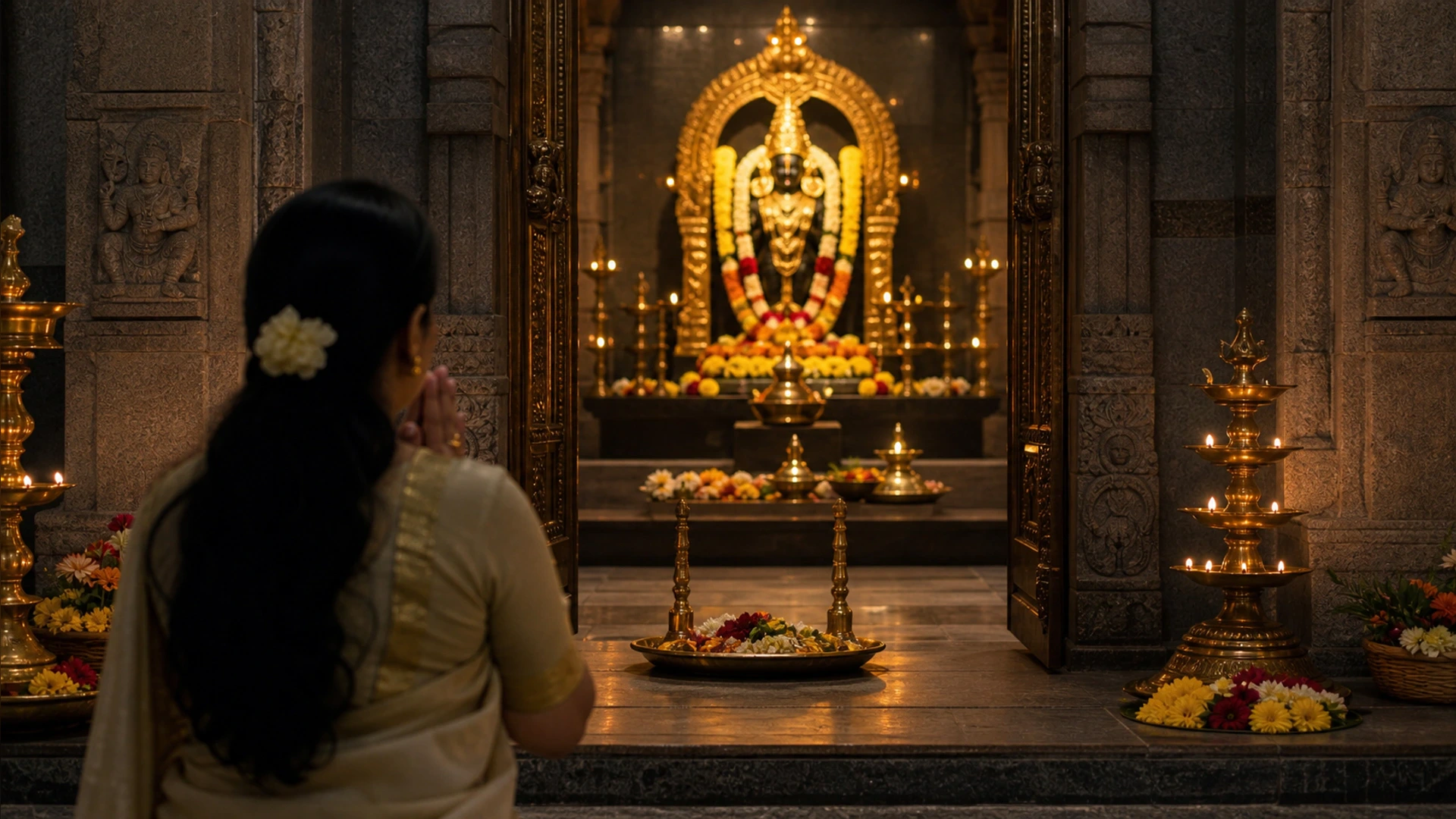
Darshan means sacred seeing: the devotee sees the deity, and the deity is understood to see and bless the devotee.
The word has philosophical depth, but most devotees first meet it through family life: puja, temple visits, stories, vrata, seva, japa, and how elders explain right conduct. Use this page as a beginner-friendly orientation, then go deeper through scripture, sampradaya teaching, and personal practice.
Meaning In Daily Practice
In temple worship, darshan is not tourism. It is a moment of presence, humility, and receiving. The devotee may bring flowers, bow, chant, or simply stand quietly with attention.
In Sanatana Dharma, concepts are rarely only definitions. They are meant to shape attention and conduct. A person may understand the word intellectually, but the word becomes real when it changes how they speak, pray, choose, forgive, serve, or remember the divine.
How A Devotee Can Use This Idea
- Before entering: settle the mind and avoid rushing only for photos
- At the sanctum: offer attention, prayer, and gratitude
- After darshan: sit briefly if possible and let the experience become steadier
Related Practices And Pages
Helpful Caveats
Do not flatten darshan into one English substitute. Words such as religion, duty, devotion, worship, sight, and philosophy can help, but none of them carries the full range alone. A careful answer should show the practical meaning and admit that different sampradayas, teachers, and regions may emphasize different aspects.
What This Does Not Mean
Darshan should not be used as a way to judge another household from outside. A family may keep a very simple altar and still be sincere. Another may follow a detailed sampradaya sequence and also be sincere. The useful question is not “which style looks bigger?” but “does this practice make the devotee more truthful, steady, humble, and connected to the divine?”
For beginners, this matters because Hindu vocabulary can feel large at first. Start with one practice and one reliable source. If the idea is darshan, connect it to a real action: light a diya attentively, chant one name with meaning, prepare for darshan without rushing, or read one short passage from a trusted scripture. The concept becomes useful when it changes the quality of attention.
A Beginner-Friendly Practice
Choose one seven-day experiment. Keep the same small practice daily: a diya, three minutes of japa, one verse, one act of seva, or one quiet bow before leaving home. At the end of the week, ask whether the practice made the mind clearer or kinder. This kind of small test is often more helpful than reading many definitions without living any of them.
For New Readers
If this is your first time learning the term, do not worry about mastering every Sanskrit nuance immediately. Read the quick answer, try one practice, and notice where the word appears again in temple visits, festival stories, family advice, or stotra meaning. Over time, the same word gathers depth. That gradual familiarity is normal in Hindu learning, where listening, practice, and reflection support one another.
A Simple Reflection
Before leaving the page, ask one concrete question: how does this idea change one action today? It may change how you light a diya, how you speak to a family member, how you prepare for darshan, or how you sit for japa. That small application is often more useful than collecting many abstract definitions.
FAQ
Is Darshan only a philosophical idea?
No. It has philosophical depth, but it is also lived through worship, conduct, family practice, temple culture, stories, and daily choices.
Do all Hindu traditions explain it identically?
No. Different sampradayas may emphasize different layers. This page gives a practical beginner orientation, not the final word for every lineage.
Where should I go next?
Start with a related practice page, then read a scripture or teacher from the tradition you actually follow.